



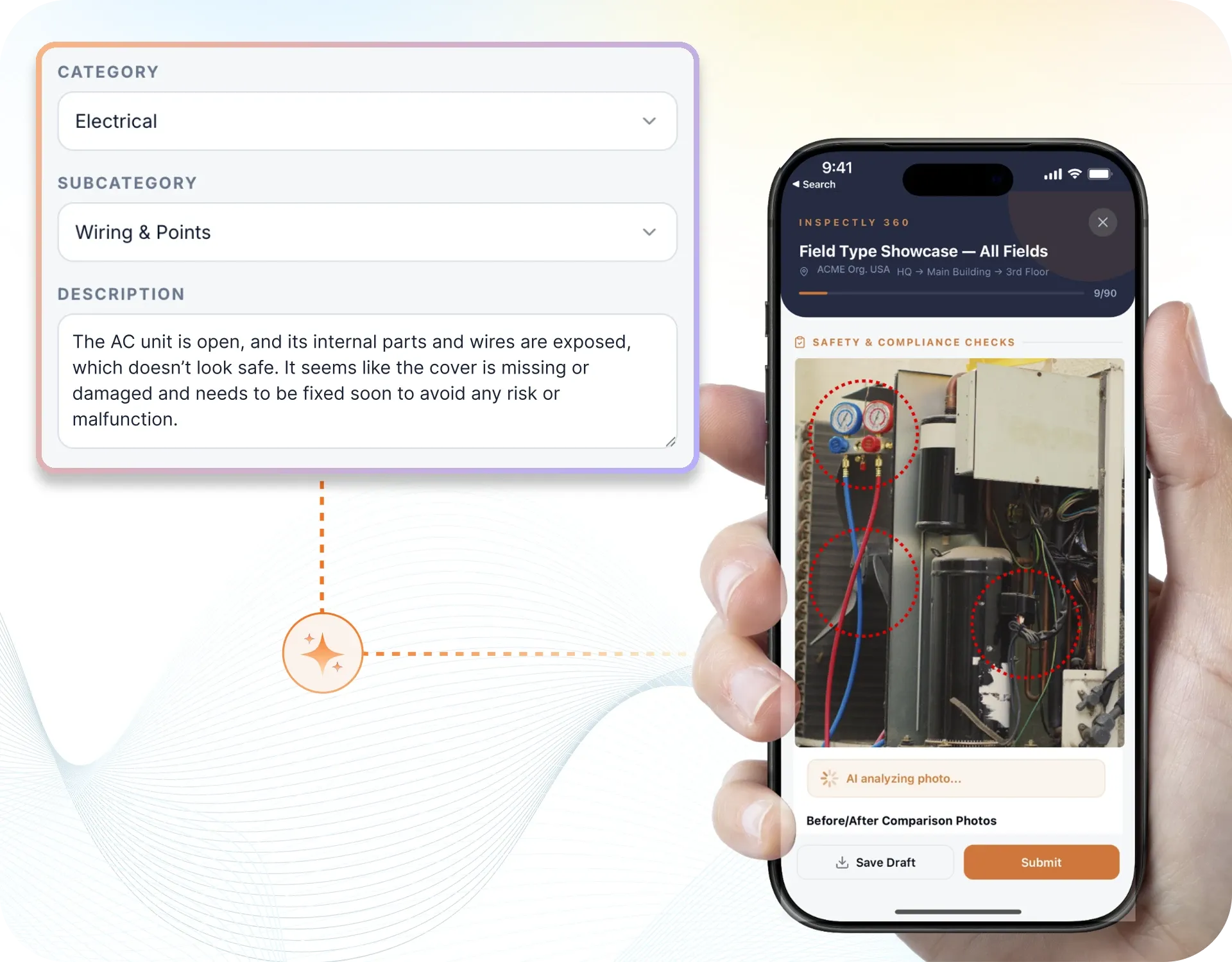
Take a Photo. AI Fills the Form
Your inspector takes a photo of any asset or defect. AI reads it and fills the inspection form automatically. No typing. No manual entry.

Convert your checklist into Mobile App
Browse by use case or industry, or see what other teams use most.
Book 30 minutes to discuss your challenges and see how InspectWrk digitizes operations with mobile apps, automated reporting, and real-time dashboards.
Inspect every building after a storm on a phone or tablet. Record roof, exterior, window, drainage, interior, and system damage with photos and severity, flag hazards, log temporary protection, and track each repair to a final report.

Storm Damage Inspection App gives facilities and property teams one structured way to inspect buildings after severe weather, whether the damage came from high wind, hail, heavy rain, or fallen trees. An inspection starts with the property and the storm event, then works from the outside in: roof coverings and flashing, exterior walls and cladding, windows and doors, gutters and drainage, landscaping and outside structures, then interior ceilings, walls, and floors, and electrical and mechanical systems where they may be affected.
Every finding is recorded with photos, its location, and a severity, so damage across a site or portfolio can be compared and prioritized. Immediate safety concerns and temporary protection, such as tarping, boarding, or isolating areas, are logged straight away. Where water has entered the building, the inspection flags it for a water damage assessment. Recommended repairs become actions with owners and due dates, reinspection confirms the work, and a final report brings the evidence together for owners and insurers.
A complete post-storm workflow covers property and storm event details, the affected areas, roof damage, exterior walls and cladding, windows and doors, gutters and drainage, water entry, interior damage, electrical and mechanical systems where applicable, landscaping and outside structures, photos, damage severity, immediate safety concerns, temporary protection, repair recommendations, corrective actions, reinspection, and a final report for each property.
A consistent routine keeps storm damage inspections reliable across every site. Follow these steps to run an effective inspection:
The inspection covers the building and its surroundings after a storm: the roof and exterior envelope, openings and drainage, outside structures and landscaping, the interior, and the systems that may have been affected. Each visit records the damage found, the hazards and protection in place, and the repairs still needed.
Templates align to your property damage and incident reporting procedures, insurer evidence requirements for storm claims, building safety good practice for post-event inspection.

Build the storm damage template with objective pass-fail criteria and schedule it to mobile teams.

Inspectors run the inspection, AI checks photos for cracks, corrosion, leaks, faulty fixtures, and failed items raise corrective actions.

Dashboards built on verified storm damage data reveal recurring patterns on the storm damage across every site.
Everything your field team records during storm damage inspection, from photos and voice notes to readings and sign-off, InspectWrk turns into a finished report automatically. Faster, more accurate, and without the retyping.
Your inspector takes a photo of any asset or defect. AI reads it and fills the inspection form automatically. No typing. No manual entry.
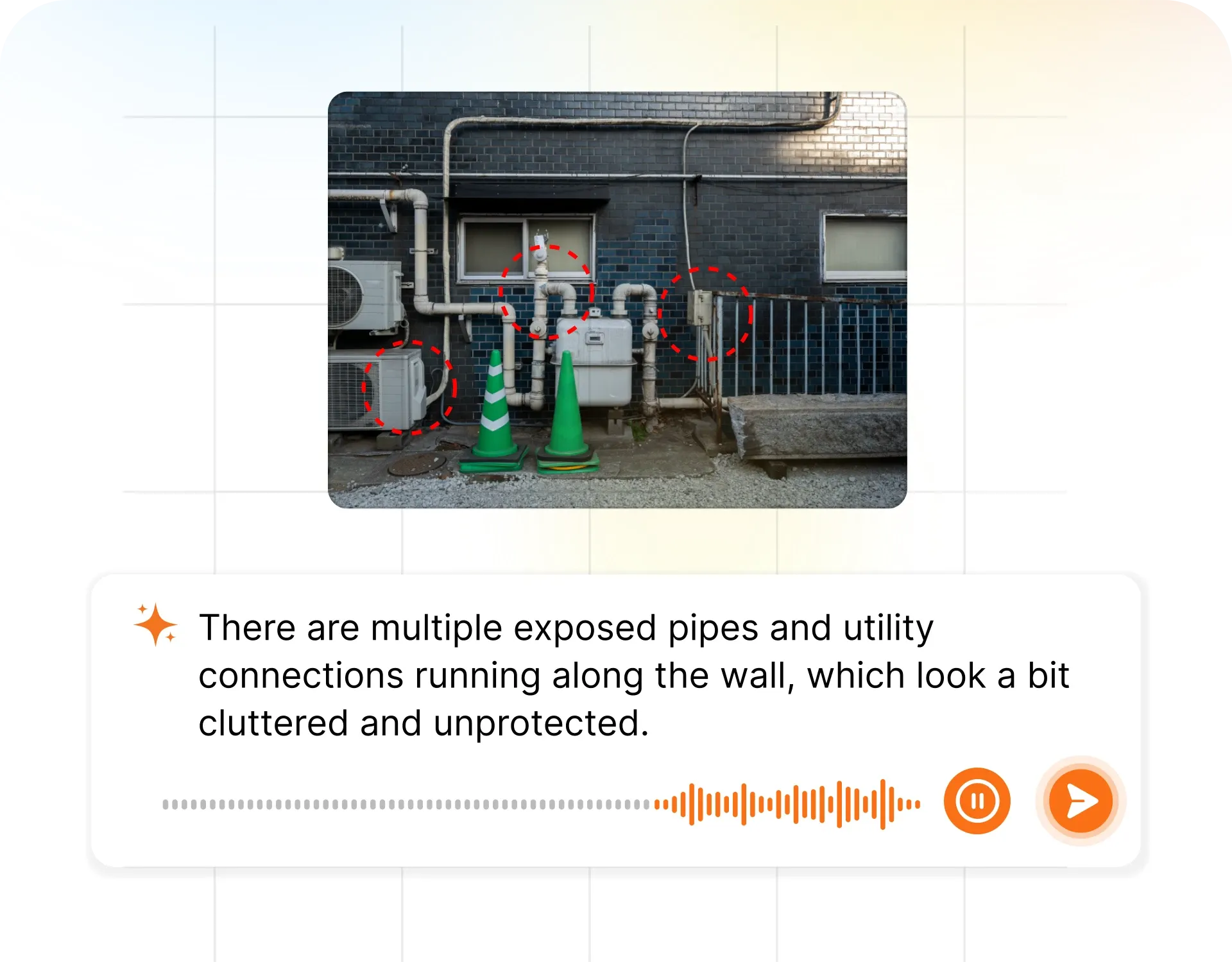
Inspectors speak their observations in any language. AI transcribes and fills the form in real time. Completely hands-free in the field.
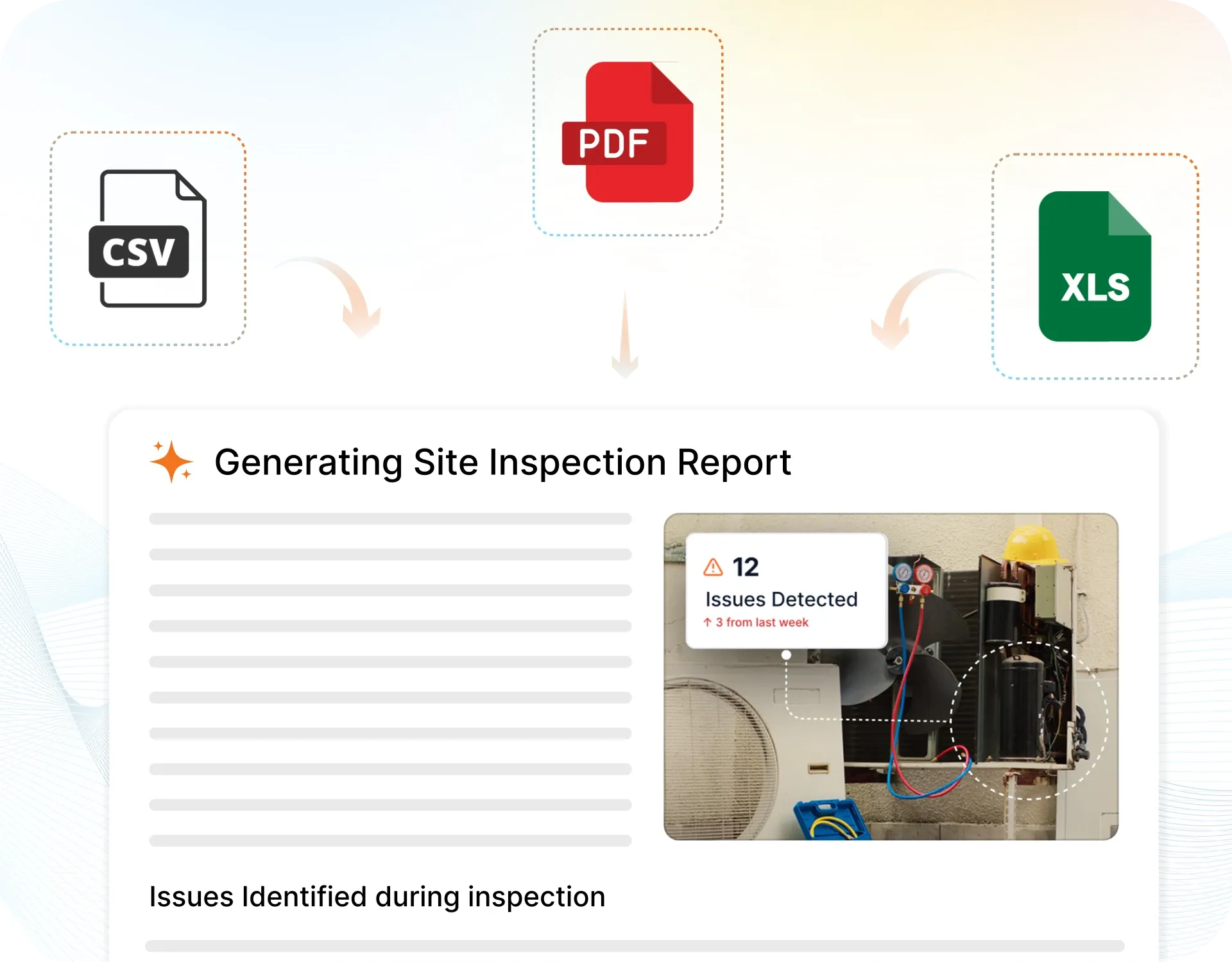
The moment an inspection is submitted, a branded PDF, Excel, or CSV report generates automatically. No manual work. No waiting.

InspectWrk integrates with the tools your team already uses, including Zoho, Microsoft 365, and SAP. No double entry.

Your operations team sees completion rates, open issues, and compliance scores across all sites in real time. No chasing updates.
From data collection to compliance: see how teams use InspectWrk for every use case.
Capture field data once with digital forms that work even offline.
Explore use caseRun standardized inspections with photos, scoring, and instant reports.
Explore use caseConduct structured audits with evidence trails and pass or fail scoring.
Explore use caseLog hazards, near misses, and safety checks from any job site.
Explore use caseCatch defects early with repeatable quality checks and sign off.
Explore use caseReport incidents in the moment with photos and follow up actions.
Explore use caseTrack assets, service history, and condition across every location.
Explore use caseRaise work orders and close out repairs with a full audit trail.
Explore use caseStay audit ready with logged checks, timestamps, and shareable reports.
Explore use caseStorm Damage work breaks down the moment evidence leaves the form. These are the problems Storm Damage Inspection App is built to remove, and what the team gets back when it does.

Problem
Solution

Problem
Solution
It is mobile software for inspecting and documenting property damage after a storm. With InspectWrk, inspectors record the property and the event, then work from the roof and exterior to the interior and building systems, capturing each finding with photos and a severity. Hazards and temporary protection are logged straight away, repairs become actions with owners and due dates, and reinspection confirms the work before a final report is issued for owners, contractors, and insurers. It works offline, which matters when a storm has knocked out power and signal.
Yes. Hail and wind are among the most common causes of storm damage, and the inspection covers what they typically affect: roof coverings and flashing, cladding, windows and doors, gutters, outside structures, and trees. Record the storm type with the event details so findings can be grouped by cause. One inspection covers every kind of storm damage, so there is no need for separate hail or wind apps, and all findings stay together in one history for each property. Note hail size or wind direction in the event details where it is known.
A storm damage inspection covers the whole property after a storm, from the roof and exterior to the interior and systems. A water damage assessment focuses on water that has entered a building: where it came from, how far moisture has spread, and how drying and restoration are progressing. When a storm inspection finds water entry, it flags it so a water damage assessment can follow up. The two work together without covering the same ground. Linking them keeps the storm inspection and the water damage record on one property timeline.
No. Inspectors record visible damage and observable hazards, such as loose roofing, damaged cladding, fallen trees, or exposed wiring, and restrict access where needed. Decisions about structural safety, electrical safety, and re-occupation belong to qualified engineers, electricians, and the responsible authority. The app records which specialists were requested, the areas kept closed in the meantime, and their findings as follow-up actions, so nothing is lost between the first visit and the final report. Recording who reopened each area, and when, keeps the access decision traceable.
It gives owners and insurers the evidence they usually ask for: the storm event and date, photos of each finding before repairs, severity, temporary protection put in place, and the repairs carried out with reinspection results. Because every entry is time-stamped and kept in one history per property, it is easier to show what the storm damaged and what was done about it. Whether a claim is accepted is decided by the insurer under the policy, not by the app.
Explore other inspection and audit apps for facilities management teams.
30 minutes. Your properties and inspection process on screen.