


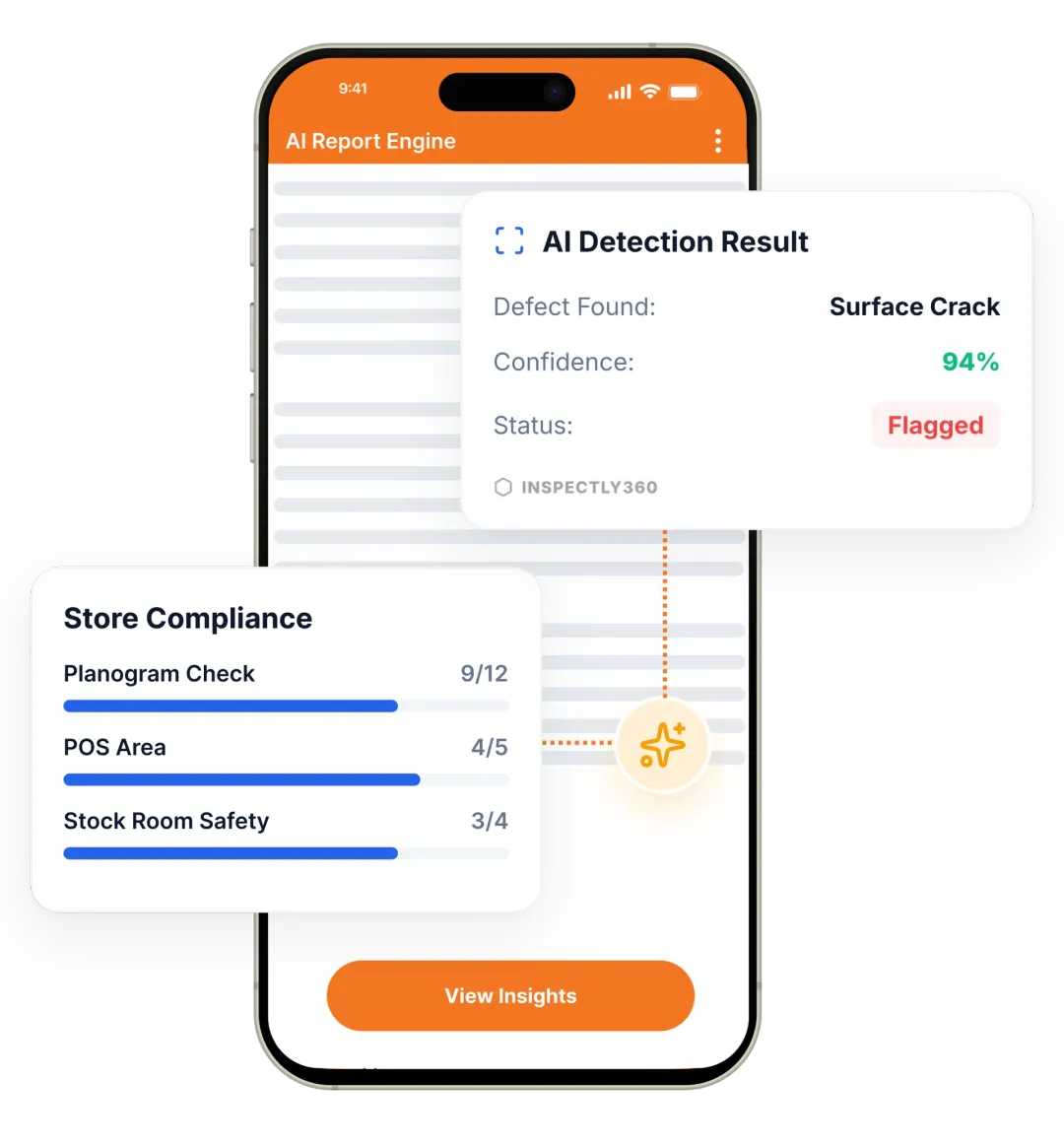
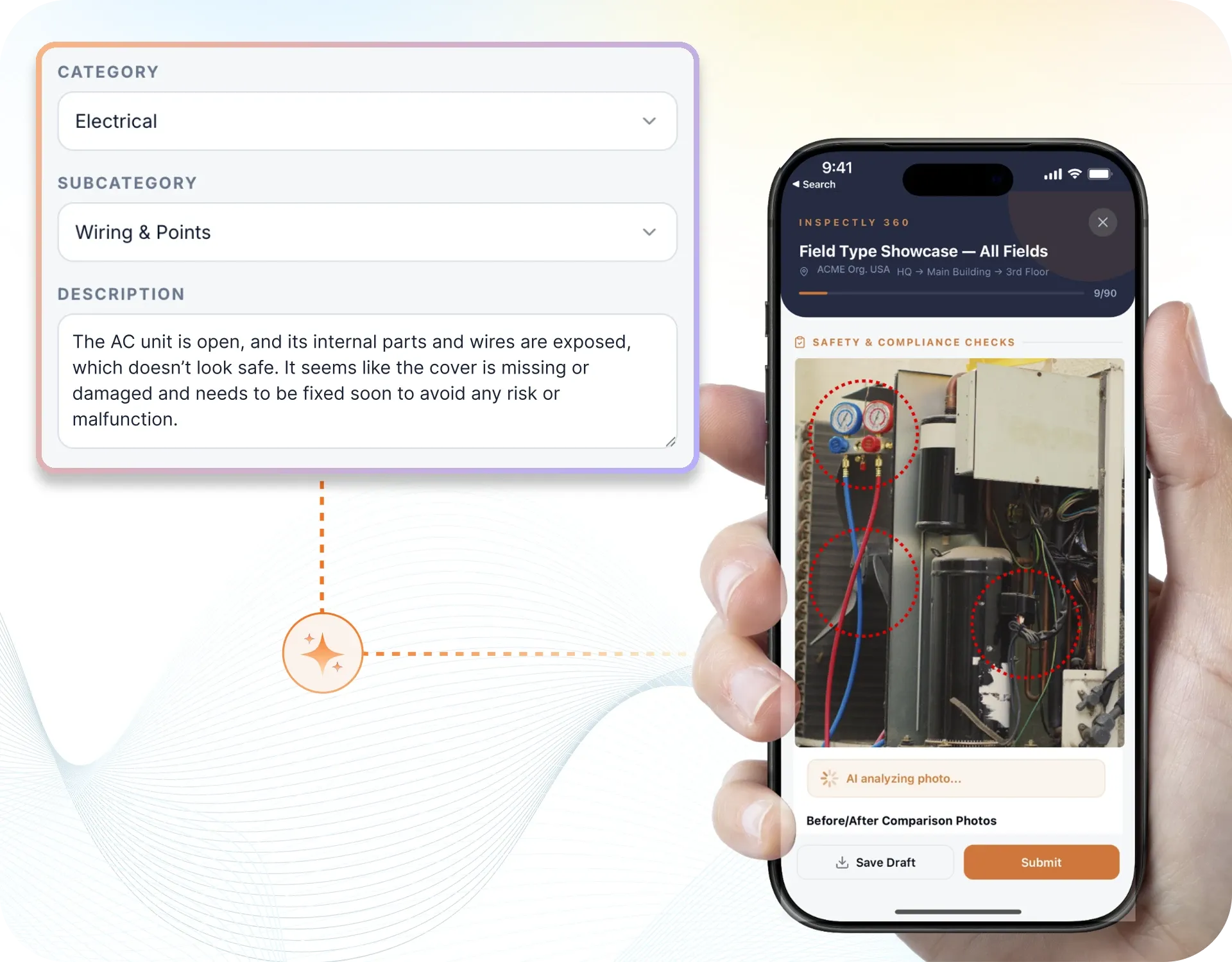
Take a Photo. AI Fills the Form
Your inspector takes a photo of any asset or defect. AI reads it and fills the inspection form automatically. No typing. No manual entry.

Convert your checklist into Mobile App
Browse by use case or industry, or see what other teams use most.
Book 30 minutes to discuss your challenges and see how InspectWrk digitizes operations with mobile apps, automated reporting, and real-time dashboards.
Document water damage the moment you arrive. Record the source and type of water, map moisture room by room with readings and photos, log damaged materials and contents, and track mitigation, drying, and restoration work in one assessment history.

Water Damage Assessment App gives facilities, property, and restoration teams one structured way to record what water has damaged and what needs to happen next. An assessment starts with the property, the incident, and the water source, such as a burst pipe, roof leak, appliance failure, or flooding, and the type of water involved. The assessor then works room by room, recording visible damage to walls, ceilings, floors, fixtures, and contents, with photos and moisture readings that show how far the water has spread beyond what can be seen.
The app then records the response: immediate mitigation such as isolating the source and extracting water, drying and dehumidification status on each visit, damaged assets and materials, and the recommended restoration and repair work. Each item becomes an action with an owner and due date. Teams that follow IICRC S500 can record the water category and class their process uses. Repeat visits build one history, so drying progress, remaining wet areas, and completed work are all visible for repairs and insurance.
A complete water damage workflow covers the property and incident details, the water source and type, the affected rooms and areas, visible damage to walls, ceilings, floors, fixtures, and contents, moisture readings and the extent of the wet area, photos, immediate mitigation, drying and dehumidification status on each visit, damaged assets and materials, recommended restoration and repair work, and follow-up actions with owners, all kept in one assessment history.
A consistent routine keeps water damage assessment running the same way across every site. Follow these steps to work through it:
The assessment covers the building and contents affected by water: where the water came from, which rooms and materials it reached, how far moisture has spread, what was done to stop further damage, and what drying and restoration work is needed. Each visit records what was found and what changed since the last one.
Templates align to IICRC S500 where your restoration process follows it, your organization's incident and property damage procedures, insurer evidence requirements for water damage claims.

Configure the water damage assessment workflow and assign or schedule the work to the right people and sites.

Teams complete the water damage assessment steps on mobile, capturing photos, notes, and status as they go.

Exceptions become owned actions tracked to closure, and dashboards show water damage assessment status across every site.
Everything your field team records during water damage assessment, from photos and voice notes to readings and sign-off, InspectWrk turns into a finished report automatically. Faster, more accurate, and without the retyping.
Your inspector takes a photo of any asset or defect. AI reads it and fills the inspection form automatically. No typing. No manual entry.
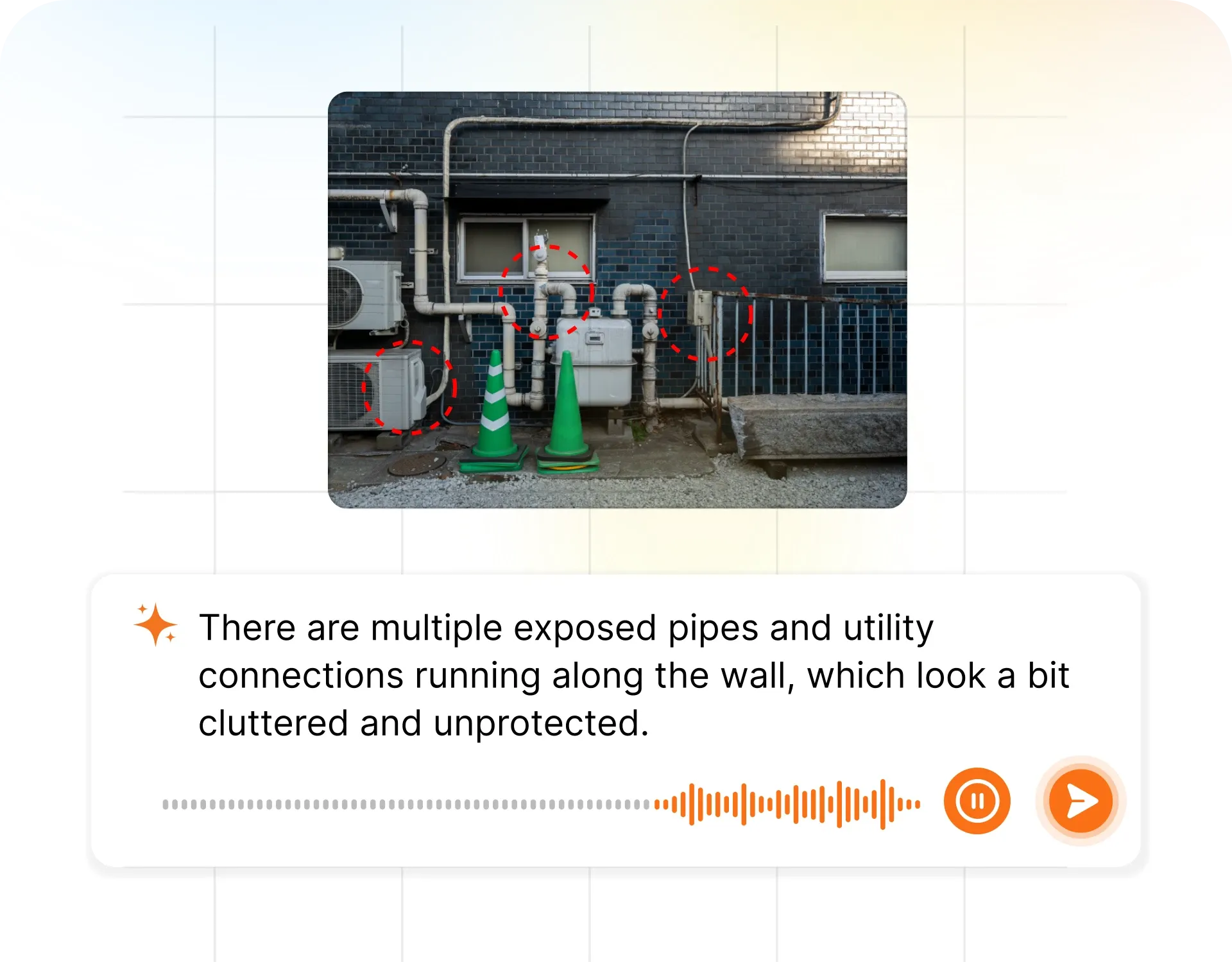
Inspectors speak their observations in any language. AI transcribes and fills the form in real time. Completely hands-free in the field.
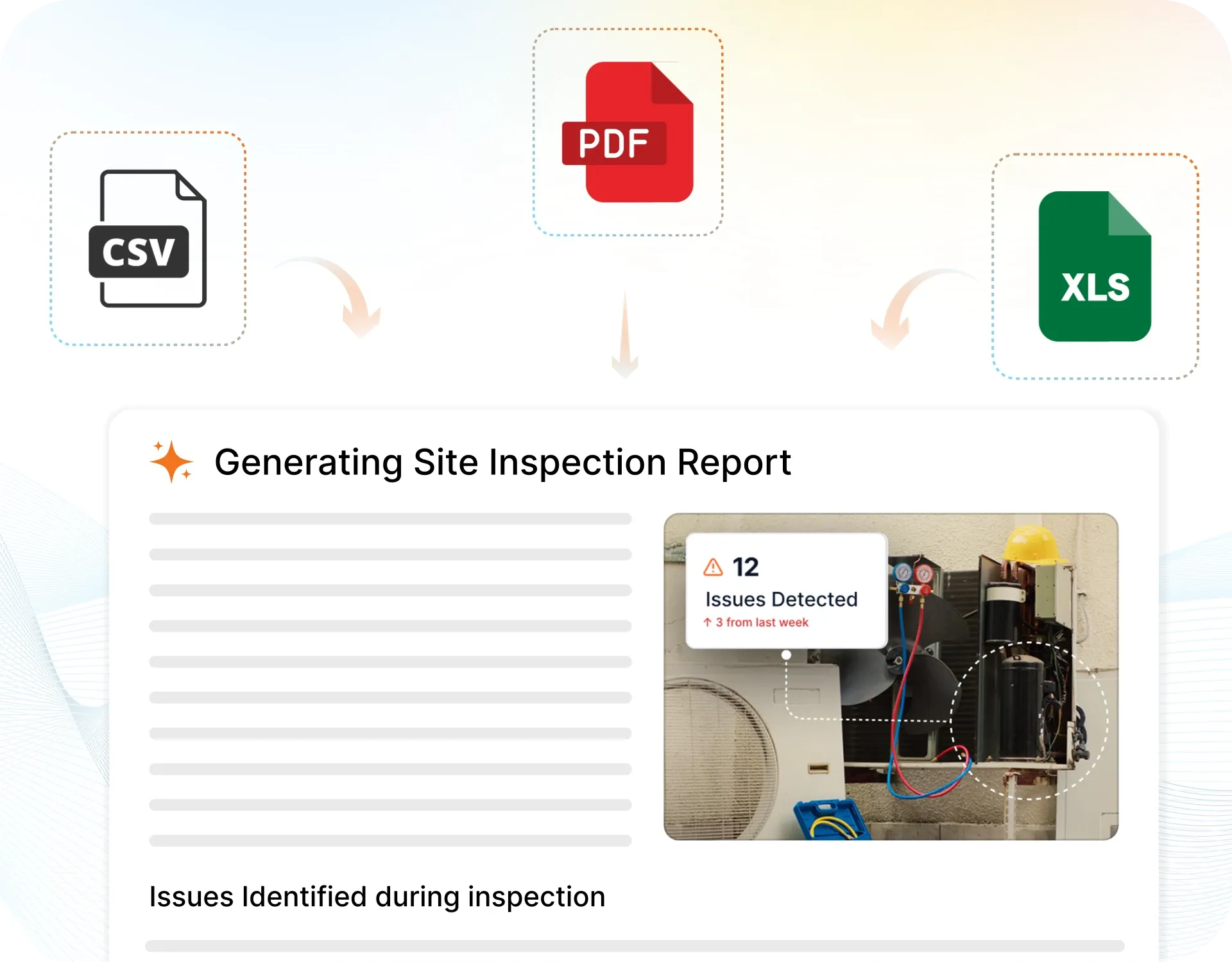
The moment an inspection is submitted, a branded PDF, Excel, or CSV report generates automatically. No manual work. No waiting.

InspectWrk integrates with the tools your team already uses, including Zoho, Microsoft 365, and SAP. No double entry.
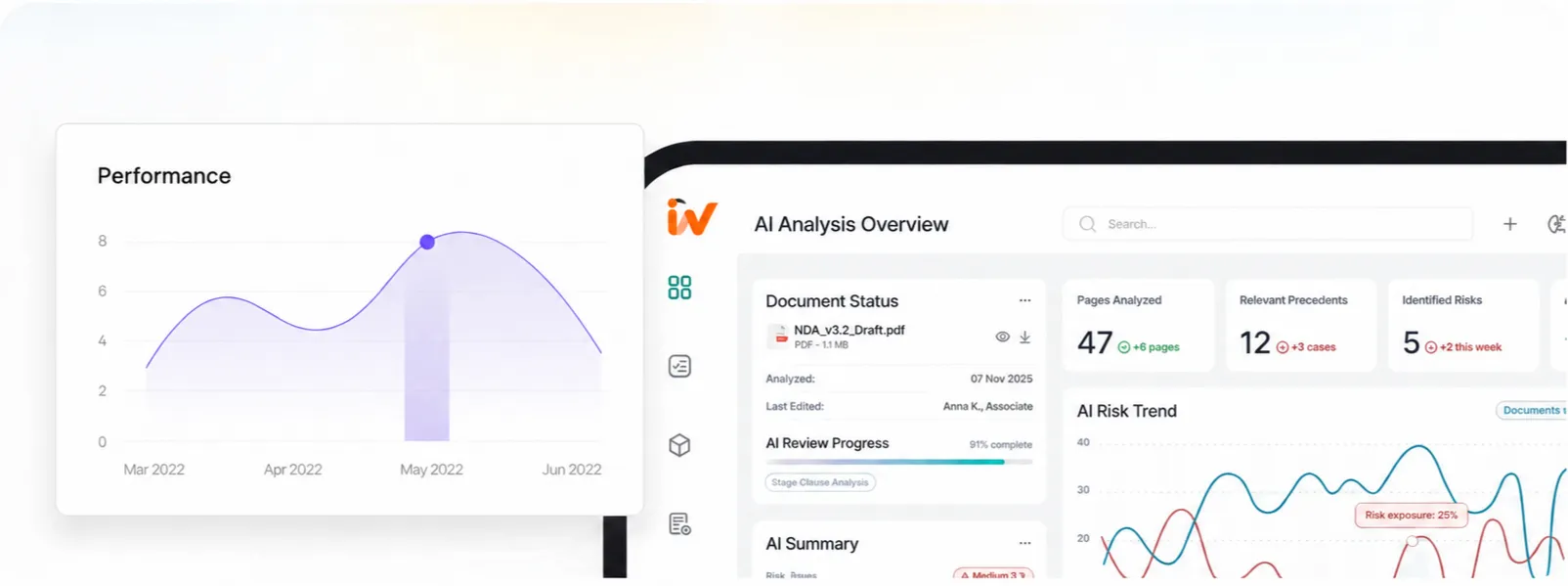
Your operations team sees completion rates, open issues, and compliance scores across all sites in real time. No chasing updates.
From data collection to compliance: see how teams use InspectWrk for every use case.
Capture field data once with digital forms that work even offline.
Explore use caseRun standardized inspections with photos, scoring, and instant reports.
Explore use caseConduct structured audits with evidence trails and pass or fail scoring.
Explore use caseLog hazards, near misses, and safety checks from any job site.
Explore use caseCatch defects early with repeatable quality checks and sign off.
Explore use caseReport incidents in the moment with photos and follow up actions.
Explore use caseTrack assets, service history, and condition across every location.
Explore use caseRaise work orders and close out repairs with a full audit trail.
Explore use caseStay audit ready with logged checks, timestamps, and shareable reports.
Explore use caseWater Damage Assessment breaks down when it lives across spreadsheets, email, and chat. These are the problems Water Damage Assessment App is built to remove, and what the team gets back when it does.

Problem
Solution

Problem
Solution
It is mobile software for documenting damage after water gets into a building. With InspectWrk, assessors record the property, incident, water source, and type of water, then work room by room, capturing damage to walls, ceilings, floors, fixtures, and contents with photos and moisture readings. Immediate mitigation, drying status, damaged materials, and recommended restoration work are recorded as actions, and each visit is kept in one assessment history for owners, contractors, and insurers. It works offline, so basements and plant rooms can be assessed without signal.
A leak detection app is used to find leaks and trace them to their source, often before much damage is done. A water damage assessment starts once water has already escaped: it records what the water reached, how far moisture has spread, what was done to stop further damage, and what drying and restoration work is needed. Many teams use both, with leak detection finding the cause and the assessment documenting the consequences and the recovery work. Linking the two keeps the leak record and the damage assessment on one timeline.
Photos show visible damage, but water spreads into walls, subfloors, insulation, and contents well beyond the stain you can see. Moisture readings recorded by location map the real extent of the wet area and show whether drying is working on each visit. Without them, drying often stops too early and damage or mold returns later. Recording readings next to photos gives a clear, dated record of the wet area from the first visit to the last. Take readings in unaffected areas too, as a dry reference for comparison.
The app does not certify a restoration or replace your process. Teams that follow IICRC S500, the widely used standard for professional water damage restoration, can record the water category, class, readings, and drying steps their process requires in the assessment. Teams that follow their own or an insurer's procedure can record those fields instead. Decisions about drying, material removal, and safety remain with qualified restoration professionals. Configure the fields to match the procedure your team or client requires, so every assessor records the same information in the same way.
It gives the insurer and owner the evidence they usually ask for: the water source, the date of discovery, room-by-room photos taken before cleanup, moisture readings, damaged contents, drying records, and the restoration work carried out. Because every entry is time-stamped and kept in one history, it is easier to show what was damaged and what was done. Whether a claim is accepted is decided by the insurer under the policy, not by the app. Sharing the assessment report directly with the adjuster avoids retyping.
Explore other inspection and audit apps for facilities management teams.
30 minutes. Your properties and assessment process on screen.