
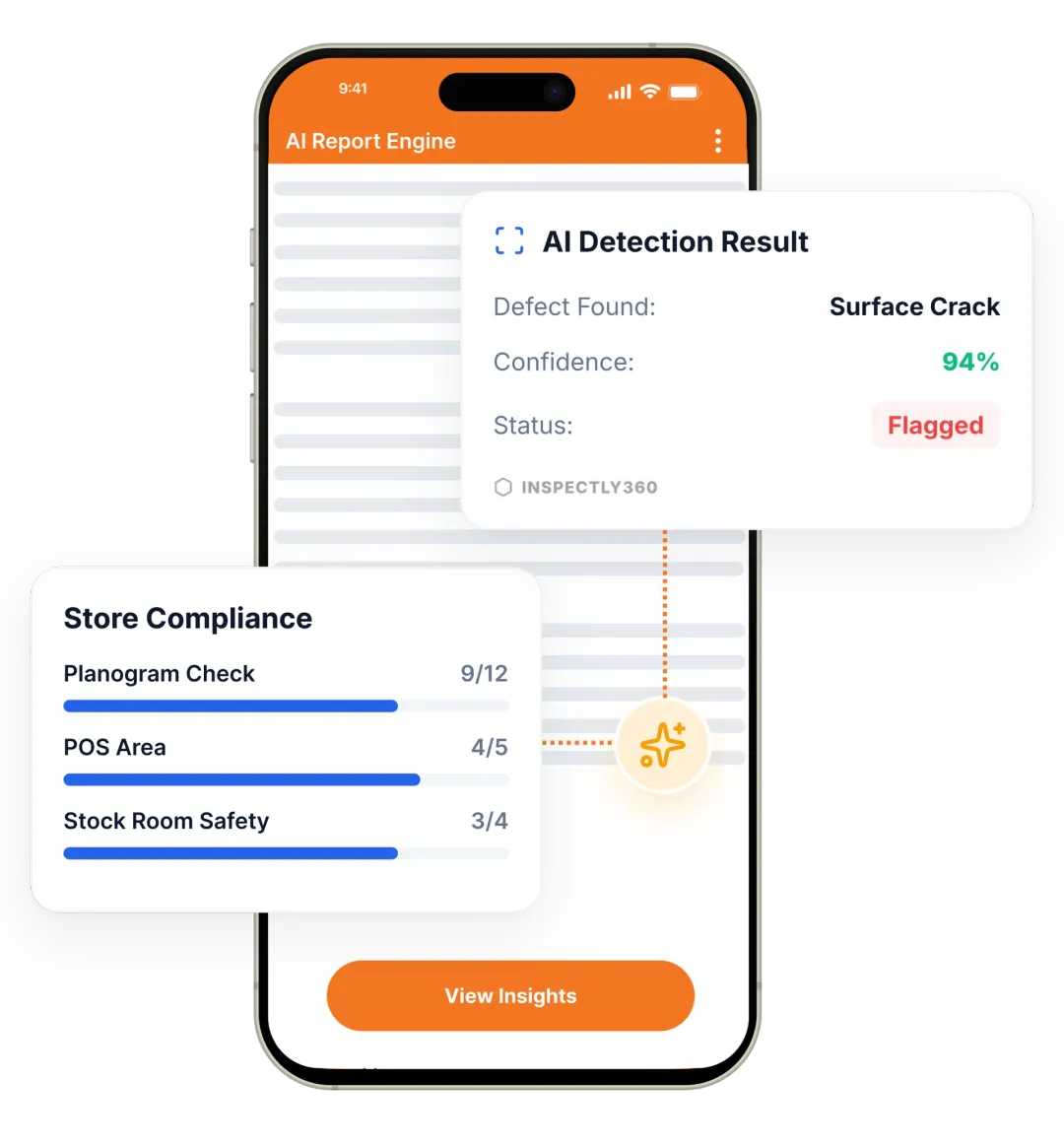
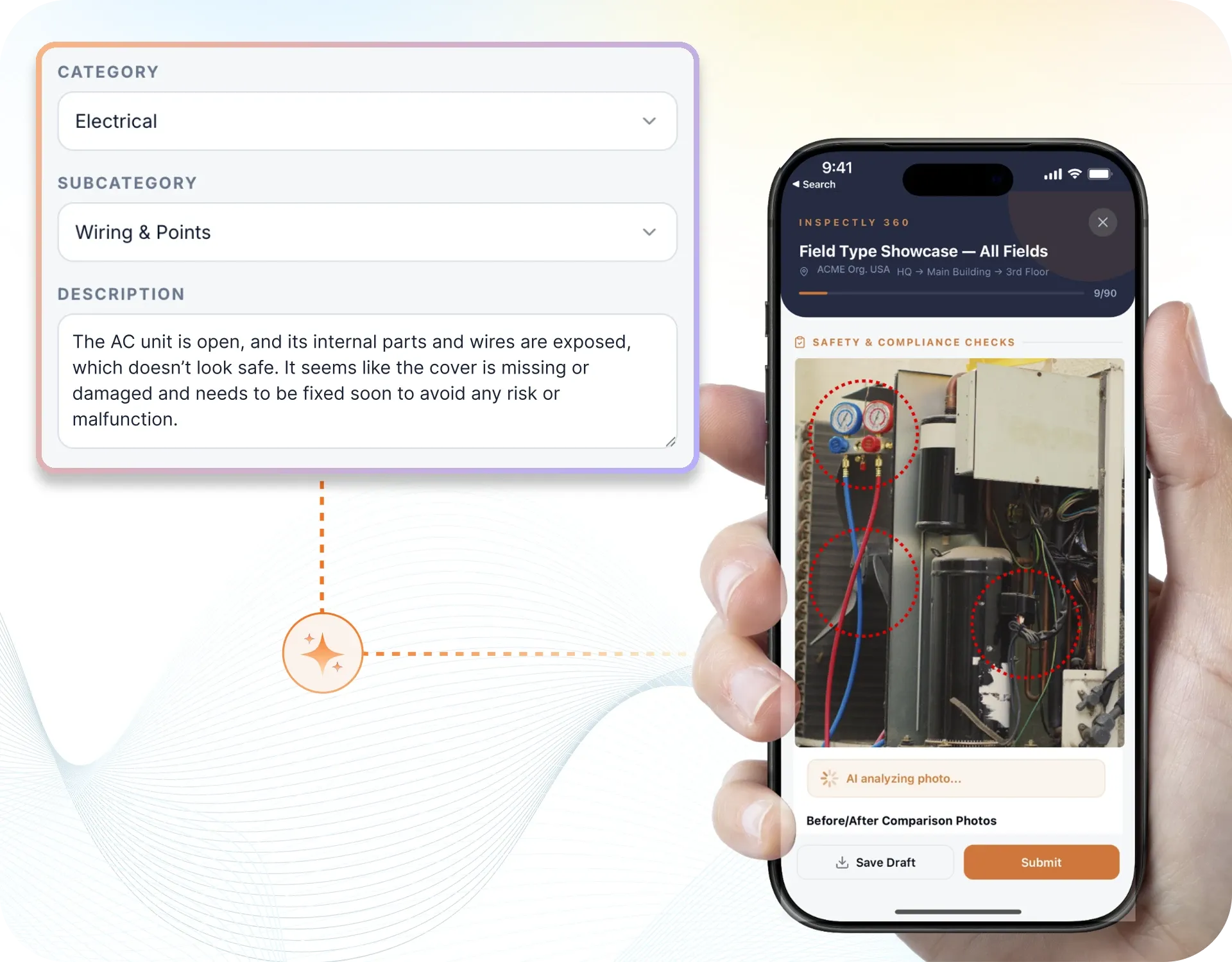
Take a Photo. AI Fills the Form
Your inspector takes a photo of any asset or defect. AI reads it and fills the inspection form automatically. No typing. No manual entry.

Shopping Trolley and Cart Audit App turns shopping trolley and cart audits into a scored, repeatable programme. Auditors score each shopping trolley against weighted criteria, attach photo evidence, and track corrective actions to verified closure across every site. Managers compare shopping trolley and cart audit scores across sites and track every corrective action to closure.

Shopping Trolley and Cart Audit App runs a scored shopping trolley audit covering wheels, castors, and steering, frame, welds, and basket condition, child seat straps and safety catches, coin lock and handle condition, and cleanliness and hygiene, with a photo and a sign-off required on each point. Without a system, shopping trolley findings live on paper and in chat. A shopping trolley fault such as seized or wobbling castors slips through. An audit then means rebuilding shopping trolley evidence from folders.
Shopping Trolley and Cart Audit App keeps one record per shopping trolley and per site, with photo evidence and a named sign-off. Each shopping trolley finding is tracked to verified closure. Store facilities and maintenance teams see shopping trolley completion and overdue actions across the retail portfolio. Every shopping trolley record proves what was checked, when, and by whom.
A comprehensive shopping trolley audit covers the key areas that affect operations and compliance. Audit shopping trolley and cart programmes with weighted scoring, photo evidence, and corrective action tracking. Your audit should include sections for wheels, castors, and steering; frame, welds, and basket condition; and child seat straps and safety catches, evidence capture, pass/fail or scoring criteria, corrective action assignment, and sign-off, so that nothing is missed and every audit finding is traceable.
A scored audit only helps if every auditor scores the same way. Follow these steps to run a shopping trolley and cart audit:
A shopping trolley audit scores condition against product and customer safety rules and manufacturer maintenance guidance, checking wheels, castors, and steering, frame, welds, and basket condition, child seat straps and safety catches, coin lock and handle condition, cleanliness and hygiene, and bay storage and collection area. Each shopping trolley finding is logged with a photo, a severity, and the failing point. So the shopping trolley audit becomes a traceable evidence pack, not an ageing spreadsheet.
Templates align to product and customer safety rules, manufacturer maintenance guidance.

Weighted criteria are built into the shopping trolley and cart audit template.

Auditors attach photo proof for each shopping trolley and cart non-conformance.

Scorecards rank sites and failed shopping trolley and cart criteria become corrective actions.
Everything your field team records during shopping trolley and cart audit, from photos and voice notes to sign-off, InspectWrk turns into a finished report automatically. Faster, more accurate, and without the retyping.
Your inspector takes a photo of any asset or defect. AI reads it and fills the inspection form automatically. No typing. No manual entry.
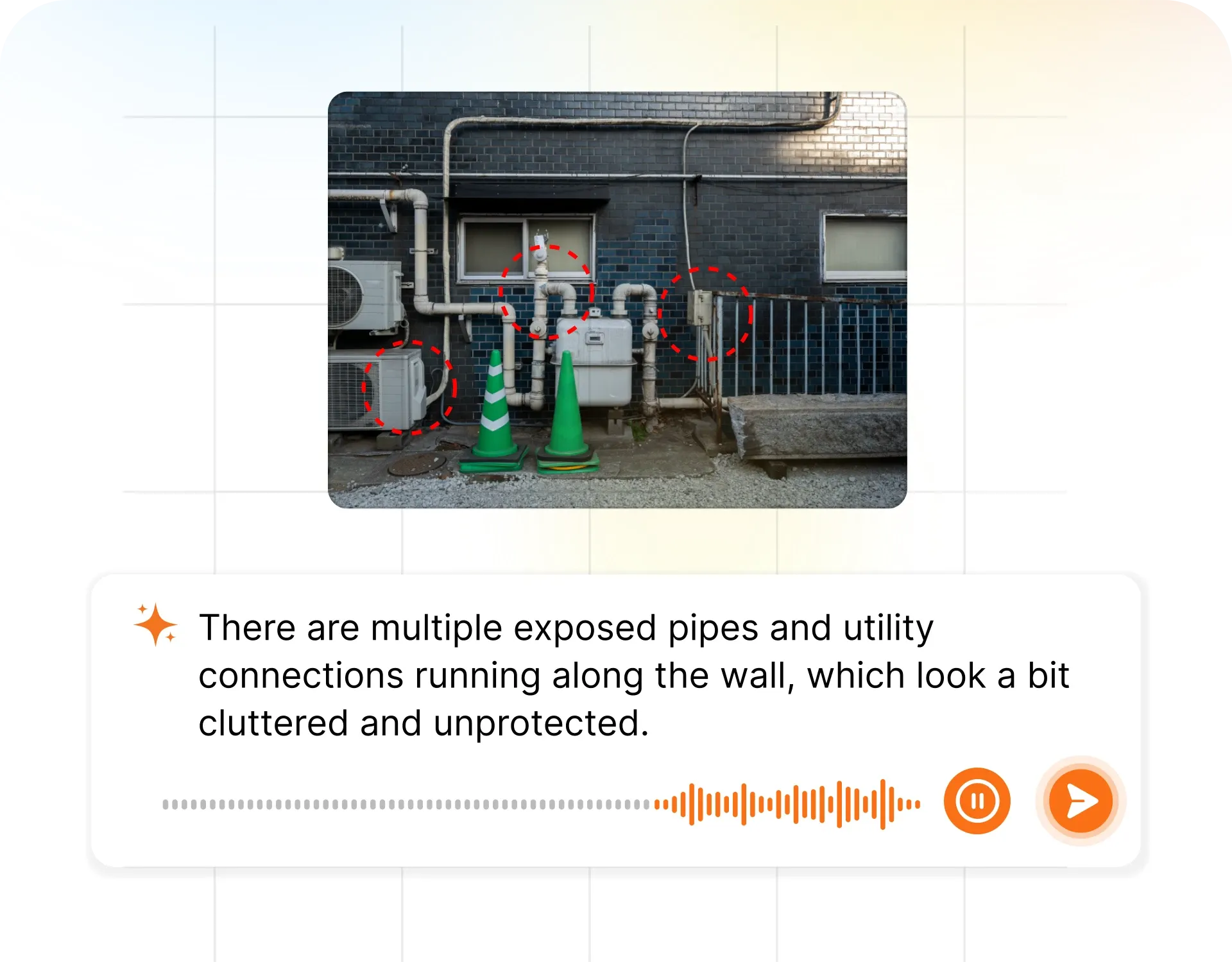
Inspectors speak their observations in any language. AI transcribes and fills the form in real time. Completely hands-free in the field.
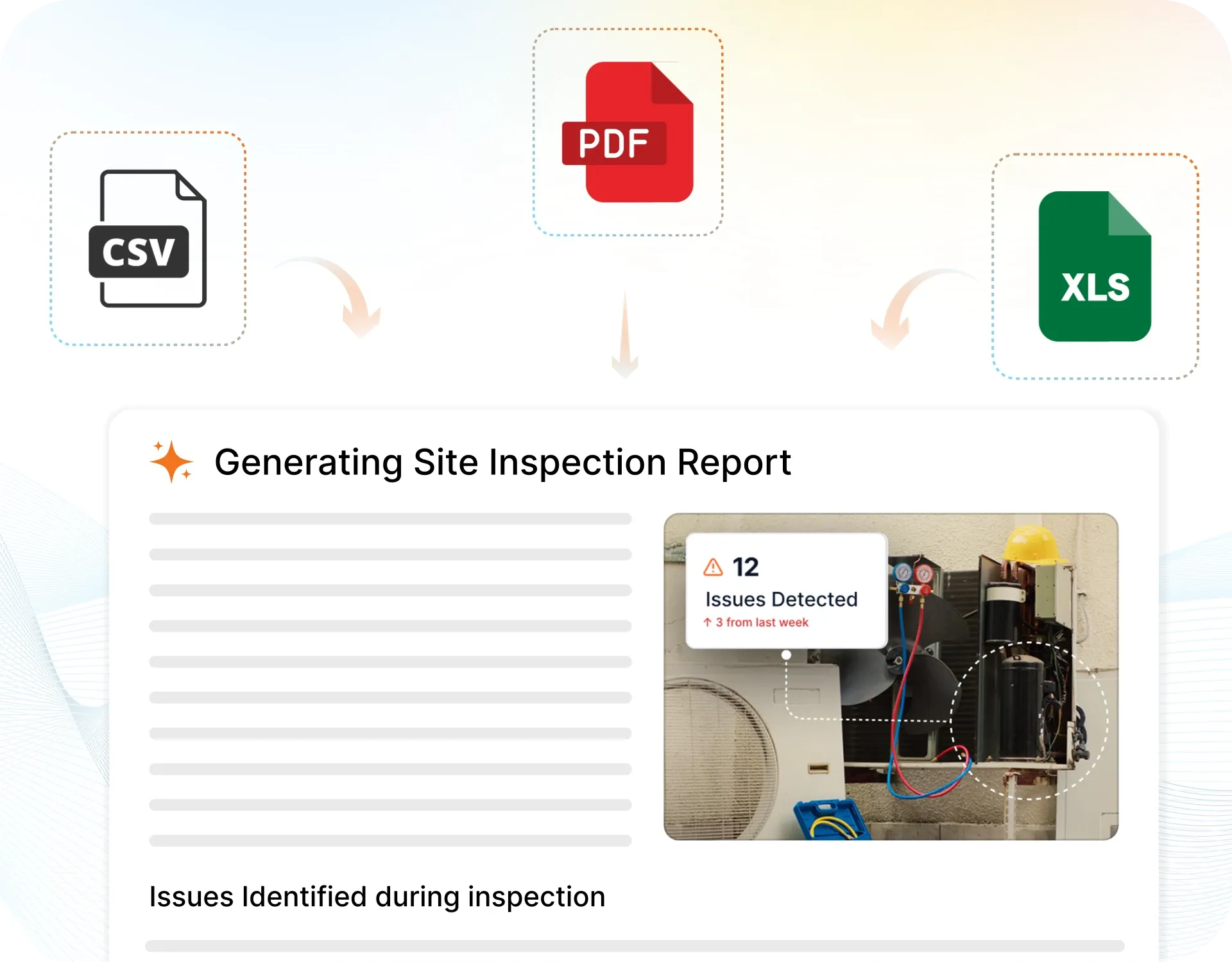
The moment an inspection is submitted, a branded PDF, Excel, or CSV report generates automatically. No manual work. No waiting.

InspectWrk integrates with the tools your team already uses, including Zoho, Microsoft 365, and SAP. No double entry.
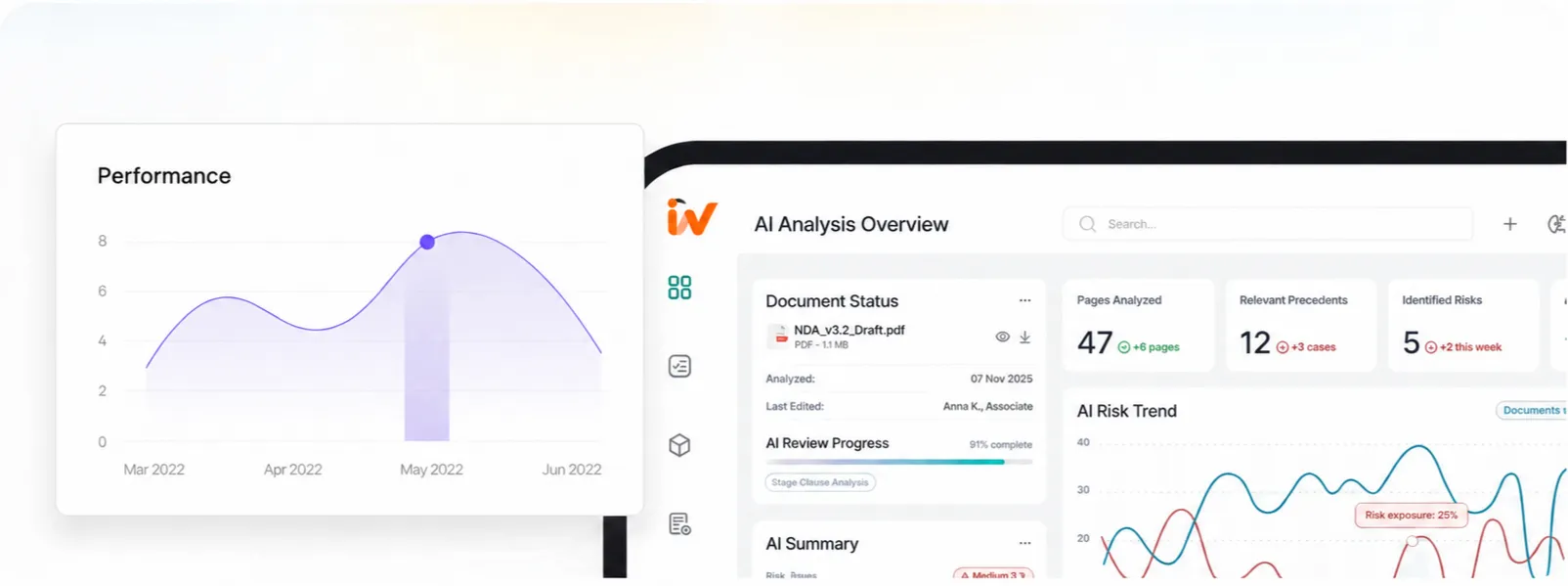
Your operations team sees completion rates, open issues, and compliance scores across all sites in real time. No chasing updates.
From data collection to compliance: see how teams use InspectWrk for every use case.
Capture field data once with digital forms that work even offline.
Explore use caseRun standardized inspections with photos, scoring, and instant reports.
Explore use caseConduct structured audits with evidence trails and pass or fail scoring.
Explore use caseLog hazards, near misses, and safety checks from any job site.
Explore use caseCatch defects early with repeatable quality checks and sign off.
Explore use caseReport incidents in the moment with photos and follow up actions.
Explore use caseInspect assets and keep condition and inspection history per asset.
Explore use caseRun preventive maintenance checks and log repairs with photo evidence.
Explore use caseStay audit ready with logged checks, timestamps, and shareable reports.
Explore use caseShopping Trolley and Cart work breaks down the moment evidence leaves the form. These are the problems Shopping Trolley and Cart Audit App is built to remove, and what the team gets back when it does.

One auditor is strict, another is lenient, and a third skips sections. The shopping trolley and cart audit scores come back, but leadership cannot tell whether a low score means a weak site or a tough auditor.
Problem
Solution

A failed item is noted during a routine audit. Nobody owns it, no date is set, and the next audit finds the same problem on the same shopping trolley. The shopping trolley and cart issue is logged, not closed.
Problem
Solution

Someone spends Friday afternoon collecting shopping trolley and cart photos, notes, and audit records into a report. By the time leadership reads it, the shopping trolley and cart data is days old and the next problem is already live.
Problem
Solution
Shopping Trolley and Cart Audit App runs a scored shopping trolley audit against product and customer safety rules and manufacturer maintenance guidance, checking wheels, castors, and steering, frame, welds, and basket condition, child seat straps and safety catches, coin lock and handle condition, and cleanliness and hygiene. Each finding is logged with a photo, a severity, and the point it fails, then routed to an owner with a deadline. It stays open until a reviewer verifies the fix, so the audit becomes a traceable evidence pack for store facilities and maintenance teams rather than an ageing spreadsheet. Because scoring is built into the template, two sites assessed by two people produce numbers you can compare fairly.
The audit targets the shopping trolley failures that matter most: seized or wobbling castors, cracked welds or a bent frame, broken child seat straps, and a faulty coin lock or handle. Left unchecked, a fault such as seized or wobbling castors can mean downtime, a safety incident, or a failed audit, so every finding becomes an owned task with a deadline. It stays open until photo proof of the repair is reviewed, and repeat problems are flagged so store facilities and maintenance teams fix the cause rather than the symptom. Prioritising by severity means the most serious issues are handled first, not whichever was reported loudest.
Shopping Trolley and Cart Audit App keeps shopping trolley checks aligned to product and customer safety rules and manufacturer maintenance guidance. The photos each standard expects are required fields, so an incomplete check cannot be closed and a gap is caught before an assessor finds it. When a review is due, store facilities and maintenance teams pull the records for the site in scope with one search instead of rebuilding them from folders. Retention and history stay searchable, so proof remains defensible at any point, not only on the day of an audit.
Yes. Shopping Trolley and Cart Audit App is offline-first: teams complete shopping trolley checks on iOS or Android with no signal, capturing photos and the evidence each check requires in the field. Each record syncs automatically when the connection returns, with its timestamp intact, and the same template runs on every site. So store facilities and maintenance teams get a live view of what is complete, overdue, or failing per location, and a weak connection in a remote or low-signal area never costs a round or loses a photo.
Every completed shopping trolley audit carries trolley condition photo, castor and frame photo, and child seat strap photo, a GPS location, a timestamp, and a named sign-off. Because the evidence is captured during the round rather than typed up afterwards, store facilities and maintenance teams can show exactly what was checked, when, and by whom. When an assessor or client asks, the record exports in seconds as a branded PDF or a searchable history, so proof never depends on someone remembering where a photo was saved or which folder holds last quarter's records.
Explore other inspection and audit apps for retail teams.
Last updated: