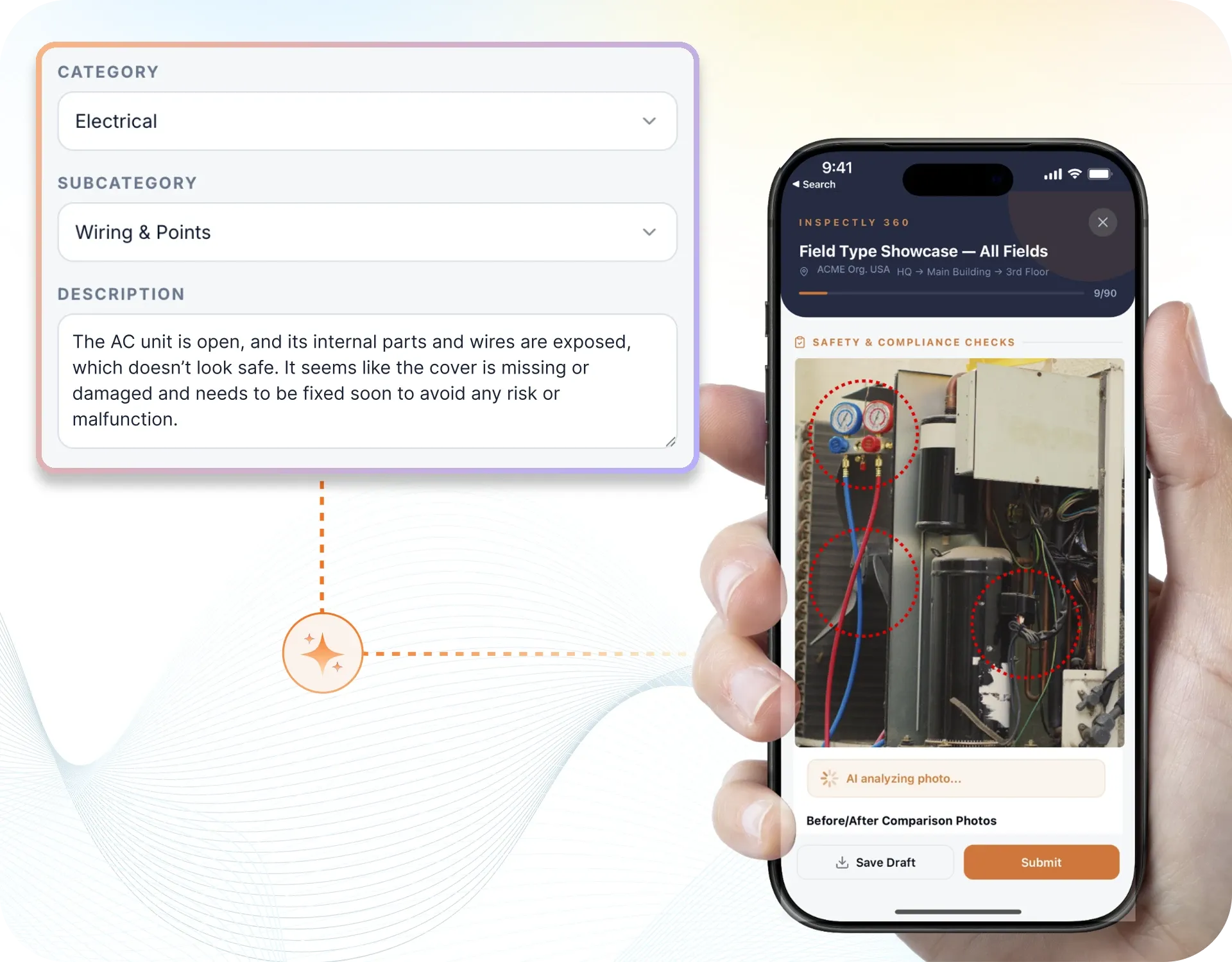
Take a Photo. AI Fills the Form
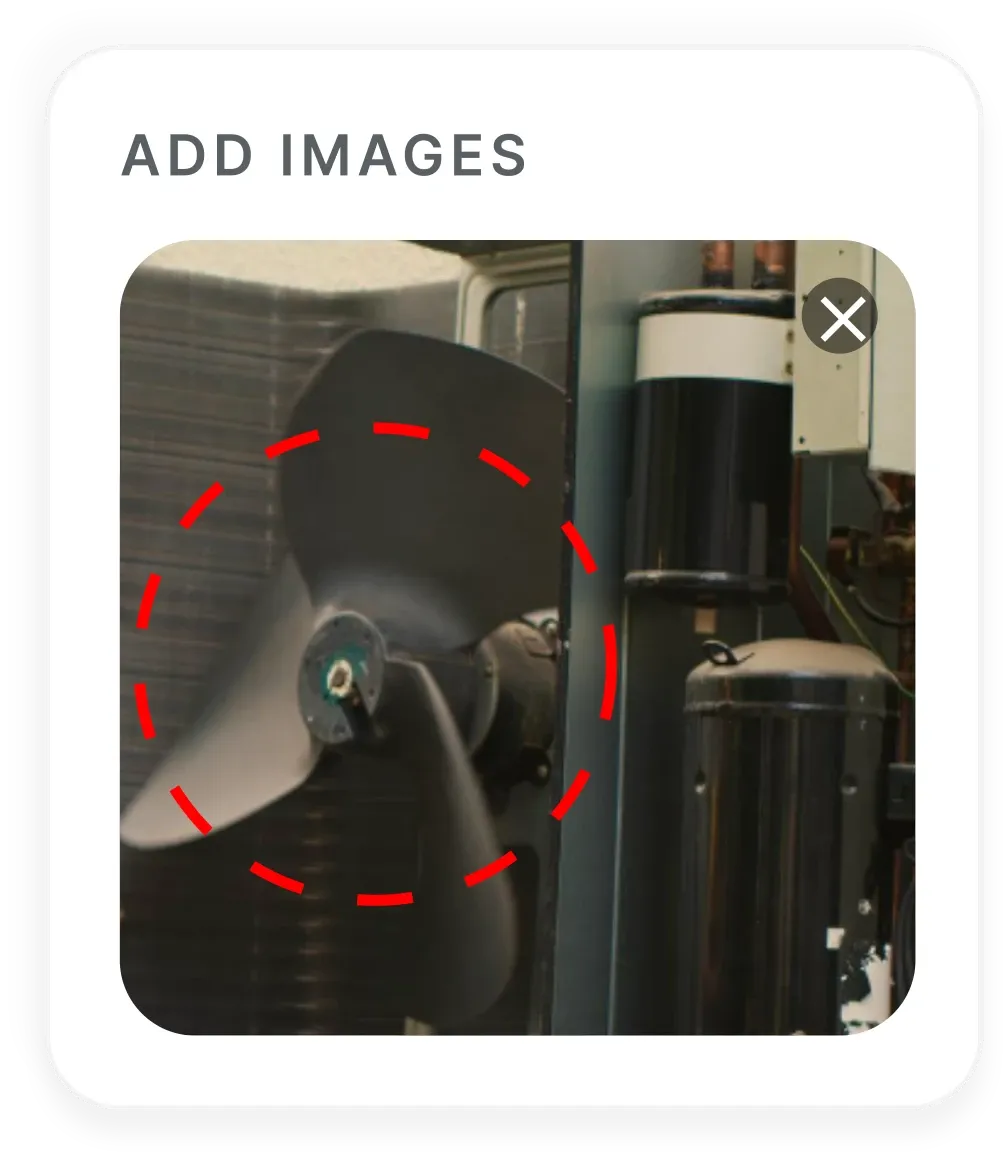
Your inspector takes a photo of any asset or defect. AI reads it and fills the inspection form automatically. No typing. No manual entry.

Use this leak detection monitoring audit form to inspect schedule and responsibilities, records and readings, alarm response and corrective actions, and procedures, retention and findings, capturing photo evidence per finding and tracking each fix through to closure.

Customize with your logo and company details.
Available on App
Run inspections on iOS and Android - no internet required. Capture photos, annotate defects, and generate reports in the field.
Run the Leak Detection Monitoring Audit Form on the InspectWrk app instead of paper. Inspectors capture photo evidence, work offline, and assign corrective actions on the spot, and the report generates itself the moment the inspection is signed off.

Leak Detection Monitoring Audit Form
Leak Detection Monitoring Audit Form Dashboard
Prioritized actions to keep operations running smoothly today.
Total Revenue
$42,680
+12% compared to last month
Active Projects
128
+8 new this week
Open Requests
56
-15 resolved this week
Operational Target
You're on track to meet this month's operational goal.
Target Task
200 ↑
Complete Task
136 ↑
Pending Task
10 ↓
Monthly Performance
Recent Client Activity
Everything your field team does on paper, InspectWrk does automatically: faster, more accurate, and without the admin.
Your inspector takes a photo of any asset or defect. AI reads it and fills the inspection form automatically. No typing. No manual entry.
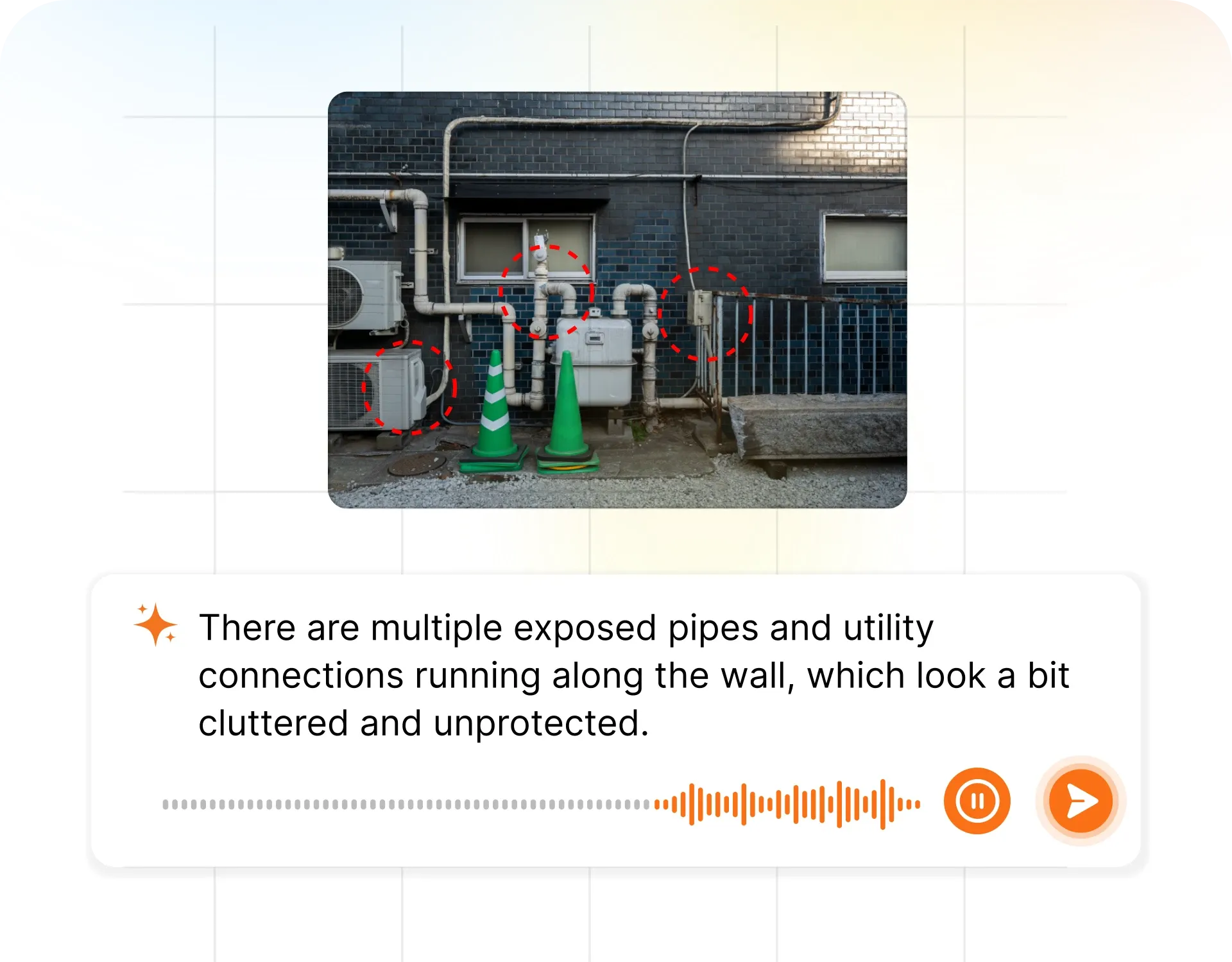
Inspectors speak their observations in any language. AI transcribes and fills the form in real time. Completely hands-free in the field.
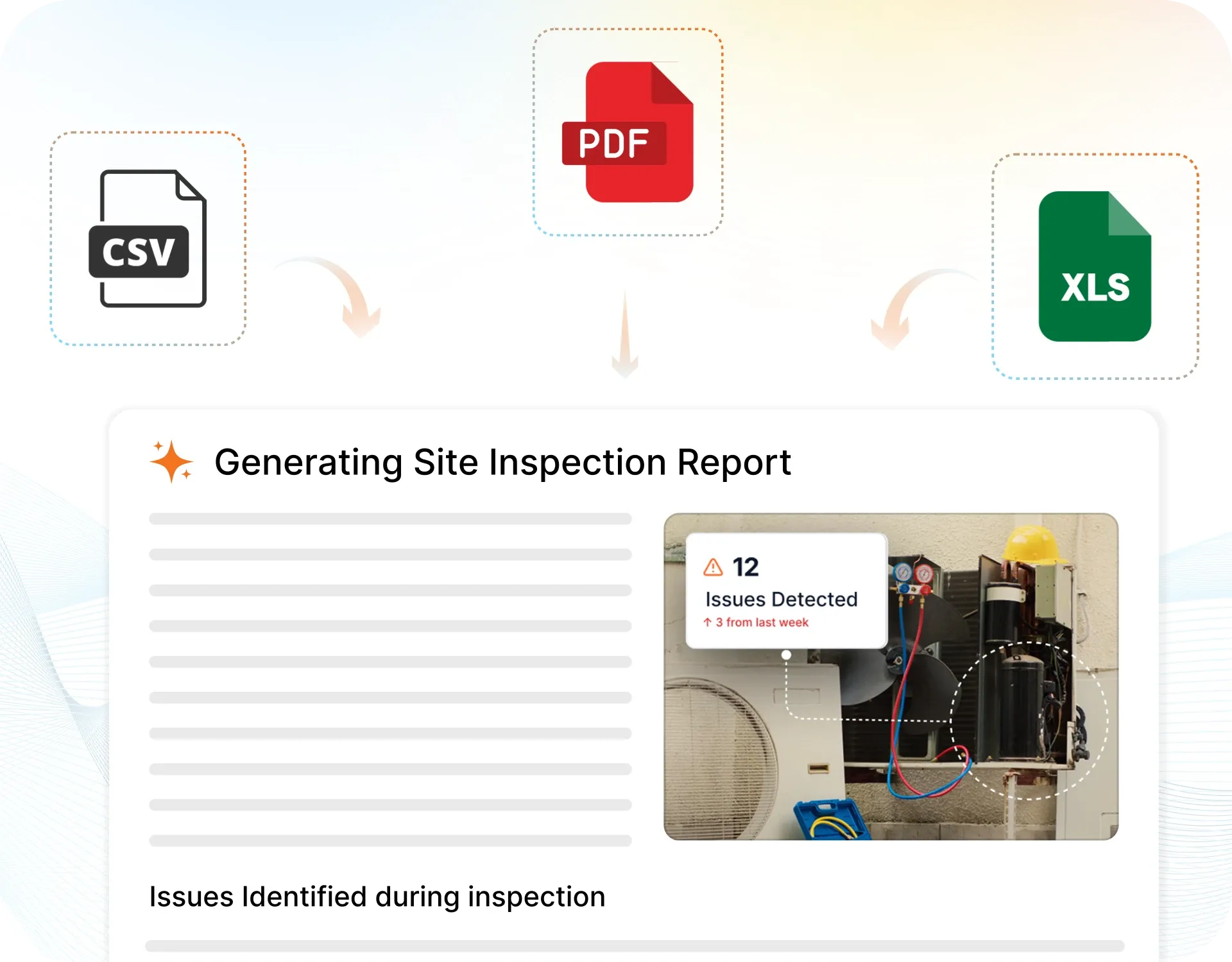
The moment an inspection is submitted, a branded PDF, Excel, or CSV report generates automatically. No manual work. No waiting.

InspectWrk integrates with the tools your team already uses, including Zoho, Microsoft 365, and SAP. No double entry.
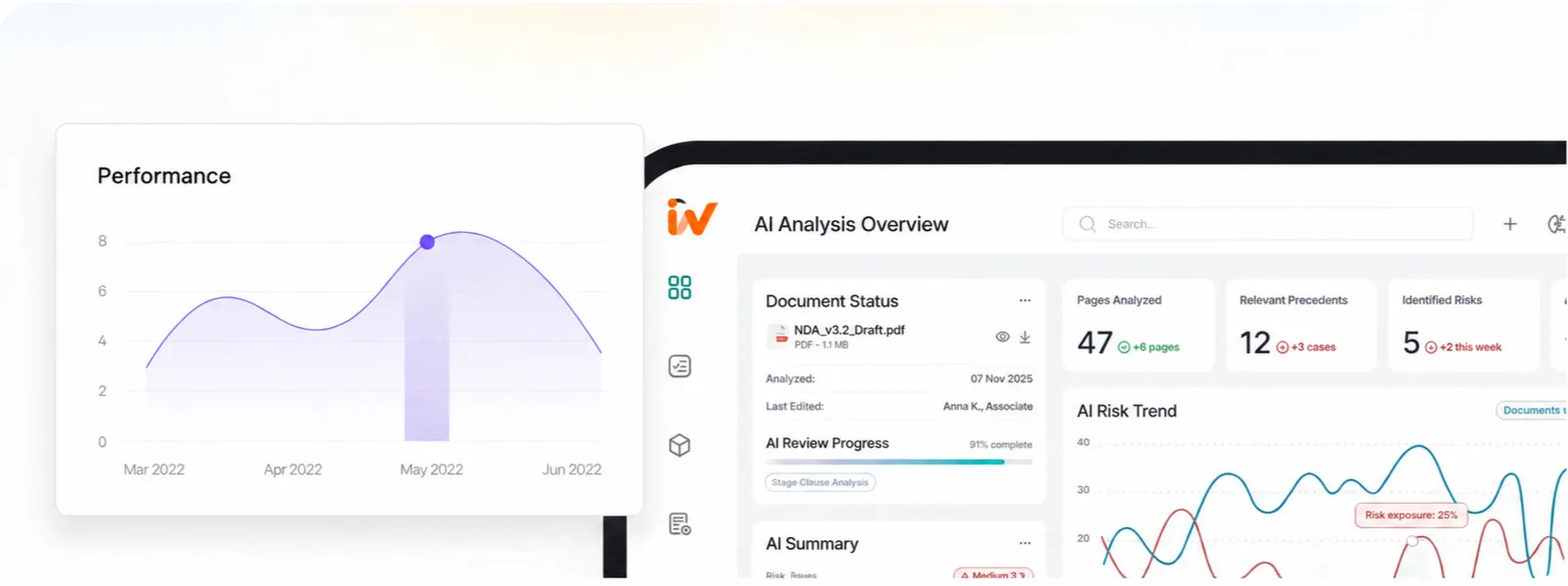
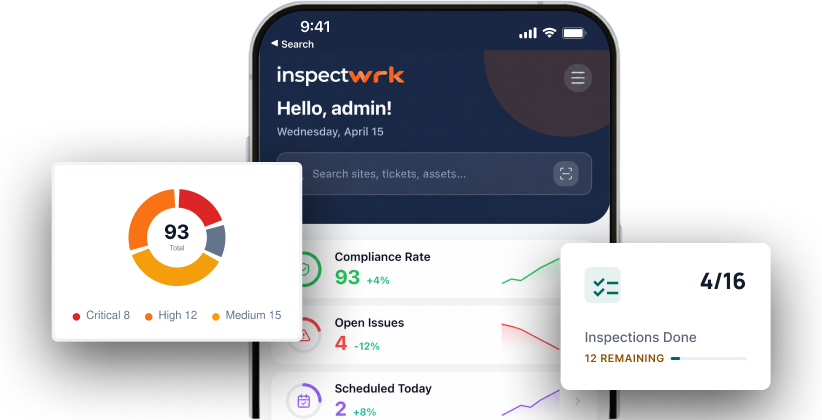
Your operations team sees completion rates, open issues, and compliance scores across all sites in real time. No chasing updates.
Manage every checklist in one connected workspace, capture evidence on mobile at the point of work, and let AI turn field inputs into clear, stakeholder-ready reports in minutes.

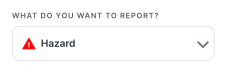
See which checklists your team has in progress across every site, jump into the same inspection with one tap, and keep field, supervisor, and back-office views in sync without sending screenshots on WhatsApp.


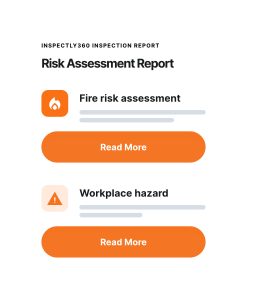
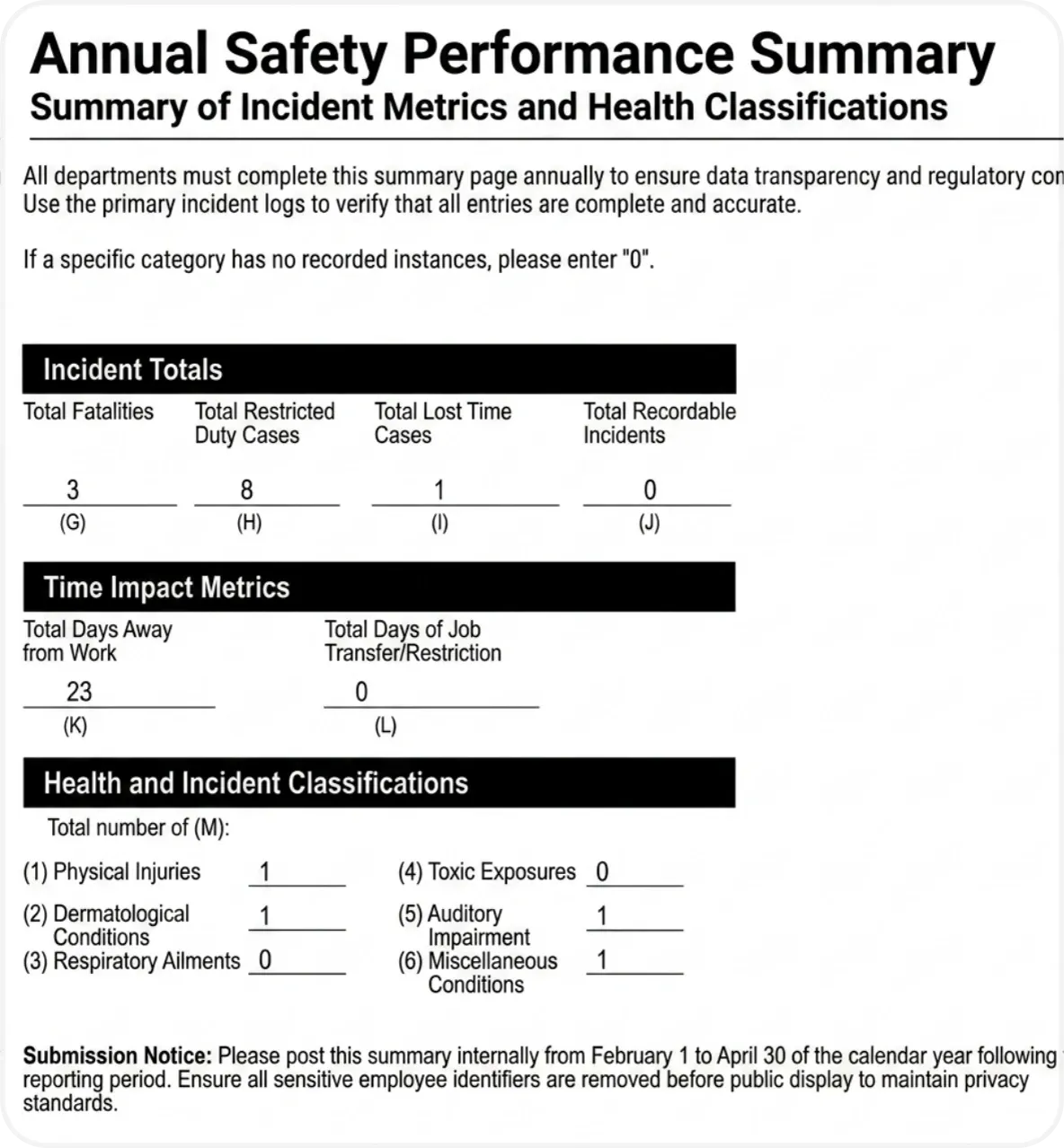


Every team reports differently. Build the report your operations, quality, or compliance leads actually want to read, share it as a branded PDF, and schedule delivery to the stakeholders who need it.

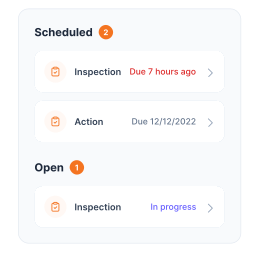

See completion, pass rate, and recurring findings across every checklist and every site, without pulling spreadsheets together at the end of the month.
Hand-picked templates for your specific industry needs.

Prepare and validate an ENERGY STAR benchmarking submission: property and building information, reporting period, utility and meter data, electricity and fuel consumption, data completeness and validation, Portfolio Manager entry and review, and recordkeeping.

Run the 06 - Energy Isolation Critical Control Checklist on the InspectWrk app to capture photo evidence per finding and generate audit-ready reports.
Run the 07 - Electrical Energy Critical Control Checklist on the InspectWrk app to capture photo evidence per finding and generate audit-ready reports.

This template helps teams inspect 20 kV medium voltage switchgear cells in substations.
A leak detection monitoring audit form is used to audit the leak detection monitoring programme, rather than take a reading or inspect equipment. It reviews the process over a period: whether a monitoring schedule and responsibilities are defined, whether monitoring was carried out as scheduled, whether records are complete, whether abnormal readings and alarms were responded to, whether corrective actions were raised and closed, and whether procedures and record retention are in place where required. It confirms the monitoring is being managed properly and records findings, marking items not applicable where the programme does not use them.
The monitoring checklist and form produce readings, and the inspection form checks the detection equipment. The audit form looks at none of those directly: it reviews the programme that governs them, over a period, whether monitoring was scheduled and done, records are complete, alarms were actioned, and corrective actions were closed. One layer does the monitoring; this layer assures that the monitoring is being managed. Keeping them separate matters, because a programme can produce plenty of readings and still have gaps in schedule, response or record-keeping that only an audit reveals.
No. The monitoring frequency, thresholds, documented procedures and record retention periods depend on the specific programme and any requirements that apply to it, so the audit does not assume a fixed rule. It confirms a schedule, thresholds, procedure and retention where the programme defines them, and marks each not applicable where it does not. The audit's job is to check that whatever the programme commits to is actually being done and recorded, not to impose external numbers. Confirm any mandatory requirements against your own programme and the applicable standards.
In InspectWrk, a monitoring audit runs as a structured form on a phone or tablet: the auditor confirms the schedule and responsibilities, samples records for completeness, checks alarm responses and corrective-action closure, and confirms procedures and retention where they apply, recording findings and non-conformities with evidence. The audit is timestamped and stored, and findings can be assigned and tracked to closure, so gaps in the monitoring programme are surfaced and fixed, and there is a clear record that the programme was reviewed rather than assumed to be working.

A leak detection monitoring audit form is used to audit the leak detection monitoring programme, rather than take a reading or inspect equipment. It reviews the process over a period: whether a monitoring schedule and responsibilities are defined, whether monitoring was carried out as scheduled, whether records are complete, whether abnormal readings and alarms were responded to, whether corrective actions were raised and closed, and whether procedures and record retention are in place where required. It confirms the monitoring is being managed properly and records findings, marking items not applicable where the programme does not use them.
A leak detection monitoring audit form is used to check that the monitoring programme is being run properly: on schedule, by assigned people, with complete records, proper alarm response, and corrective actions closed out. Its purpose is assurance over a period, not a single reading. It is deliberately an audit of the process and records, distinct from a monitoring round, a single monitoring event, or an inspection of the detection equipment.
Working through the schedule and responsibilities, the records and readings, the alarm response and corrective actions, and the procedures, retention and findings, the audit samples the programme and records non-conformities. Because schedules, thresholds, procedures and retention periods depend on the specific programme and any applicable requirements, the audit confirms them where they are defined and marks them not applicable otherwise, rather than assuming a fixed rule.
Day to day, monitoring can appear to be happening while the programme underneath it has gaps: rounds missed and never noticed, records with holes, alarms that were silenced but not investigated, and corrective actions that were raised and then forgotten. Nobody sees the pattern until an incident or an external check exposes it, by which point the gaps are hard to explain.
A leak detection monitoring audit form fixes that by stepping back and checking the programme itself over a period: schedule kept, records complete, alarms responded to, actions closed, procedures and retention in place where required. It surfaces the gaps as findings while they can still be corrected, and gives assurance the monitoring is genuinely being managed.
Auditing the programme gives assurance the monitoring is managed:
A complete audit runs from the schedule to the findings:
Check the programme is set up:
Sample the period:
Check controls and record findings:
Audit the programme over the period:
See how this checklist fits into Energy & Utilities inspection software.
This checklist runs as a mobile inspection app that works fully offline on site, with AI-powered defect detection on every photo. To see it on your own workflows, talk to our team.