Take a Photo. AI Fills the Form
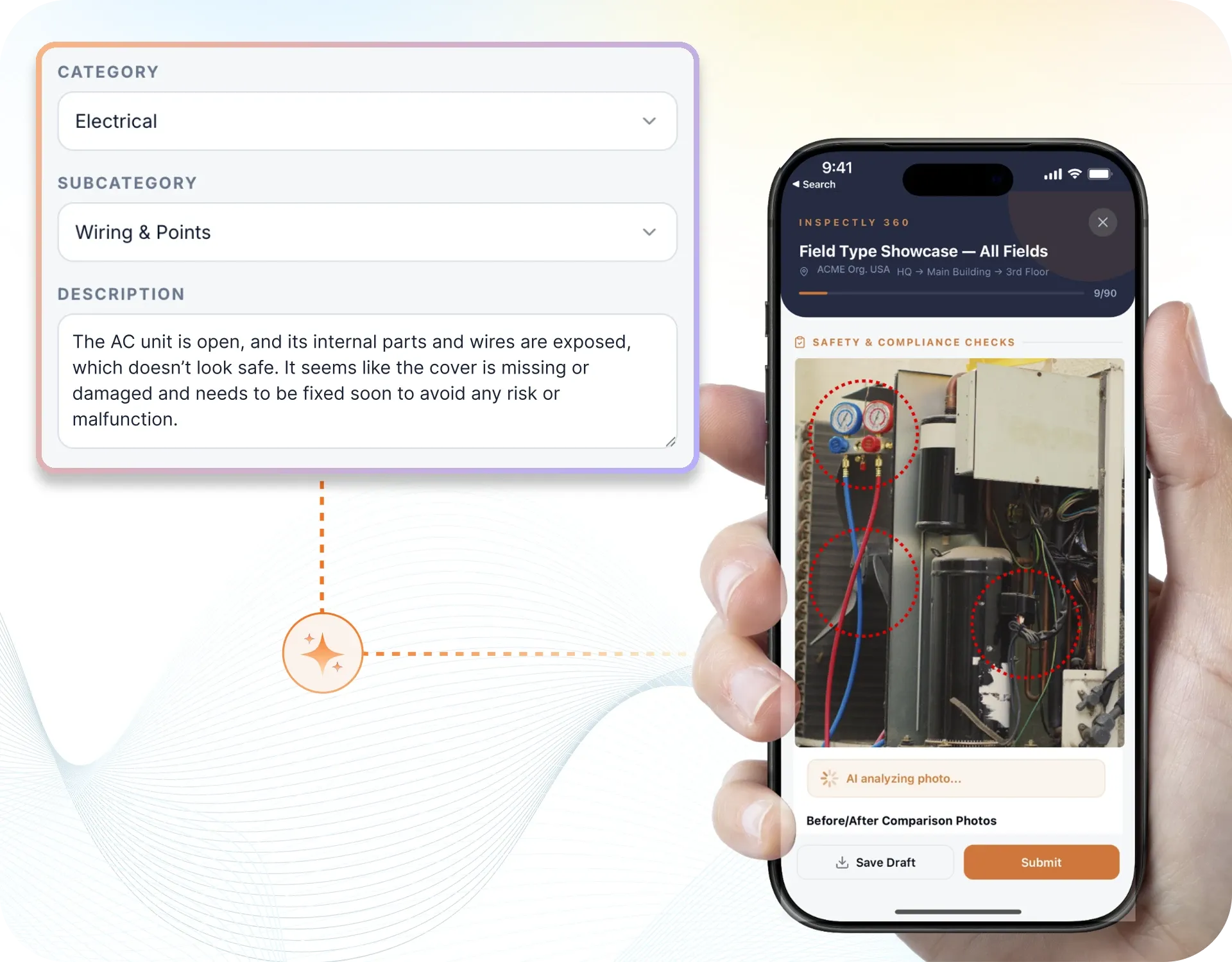
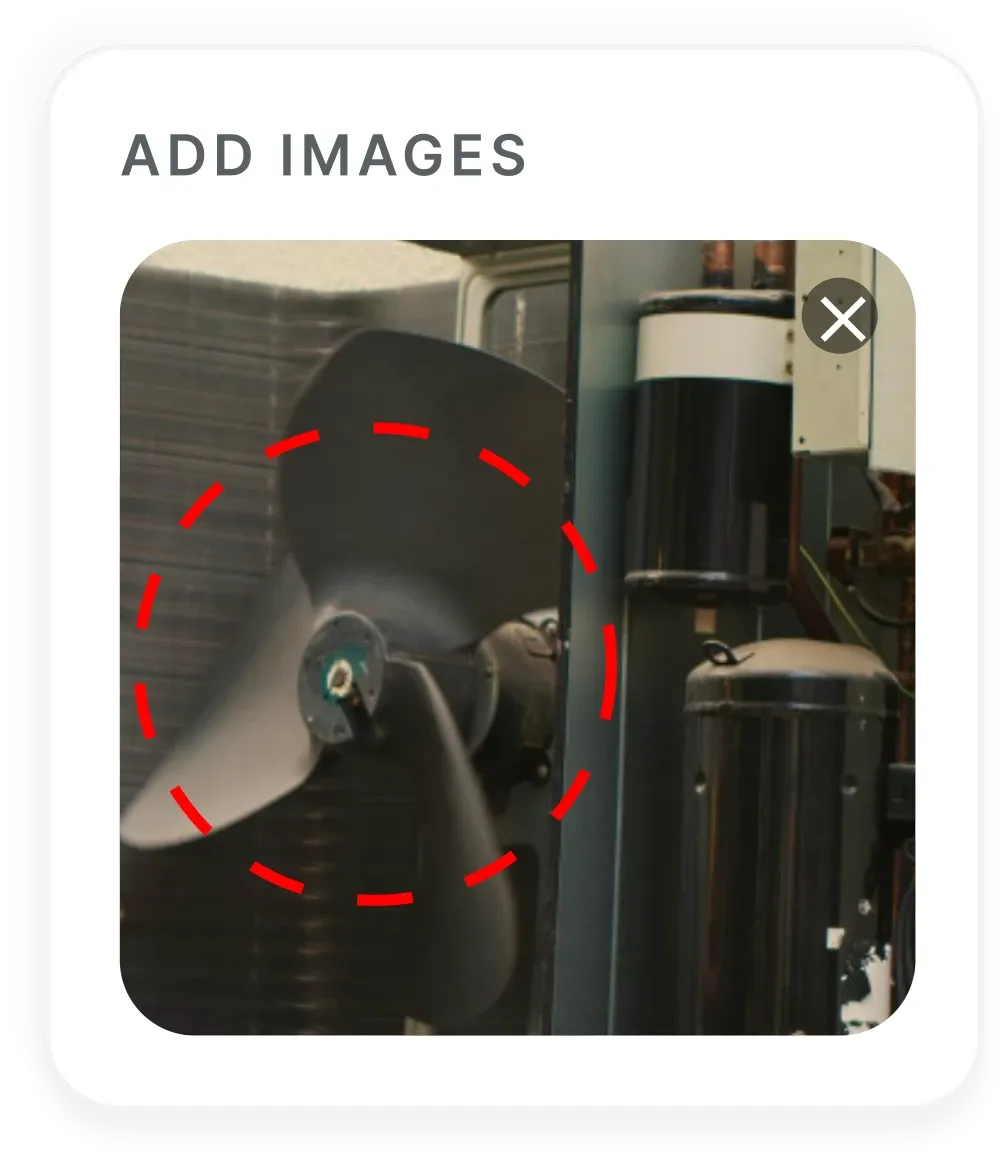
Your inspector takes a photo of any asset or defect. AI reads it and fills the inspection form automatically. No typing. No manual entry.

Convert your checklist into Mobile App
Browse by use case or industry, or see what other teams use most.
Book 30 minutes to discuss your challenges and see how InspectWrk digitizes operations with mobile apps, automated reporting, and real-time dashboards.
Use this IICRC S500 checklist to check initial water damage assessment, water category and class of loss, site safety and hazard controls, moisture mapping and initial readings, water extraction and mitigation, and drying plan and equipment placement, scoring each item and raising corrective actions with owners and due dates.
Customize with your logo and company details.
Available on App
Run inspections on iOS and Android - no internet required. Capture photos, annotate defects, and generate reports in the field.
Run the IICRC S500 Checklist on the InspectWrk app instead of paper. Inspectors capture photo evidence, work offline, and assign corrective actions on the spot, and the report generates itself the moment the inspection is signed off.

IICRC S500 Checklist
IICRC S500 Checklist Dashboard
Prioritized actions to keep operations running smoothly today.
Total Revenue
$42,680
+12% compared to last month
Active Projects
128
+8 new this week
Open Requests
56
-15 resolved this week
Operational Target
You're on track to meet this month's operational goal.
Target Task
200 ↑
Complete Task
136 ↑
Pending Task
10 ↓
Monthly Performance
Recent Client Activity
Everything your field team does on paper, InspectWrk does automatically: faster, more accurate, and without the admin.
Your inspector takes a photo of any asset or defect. AI reads it and fills the inspection form automatically. No typing. No manual entry.
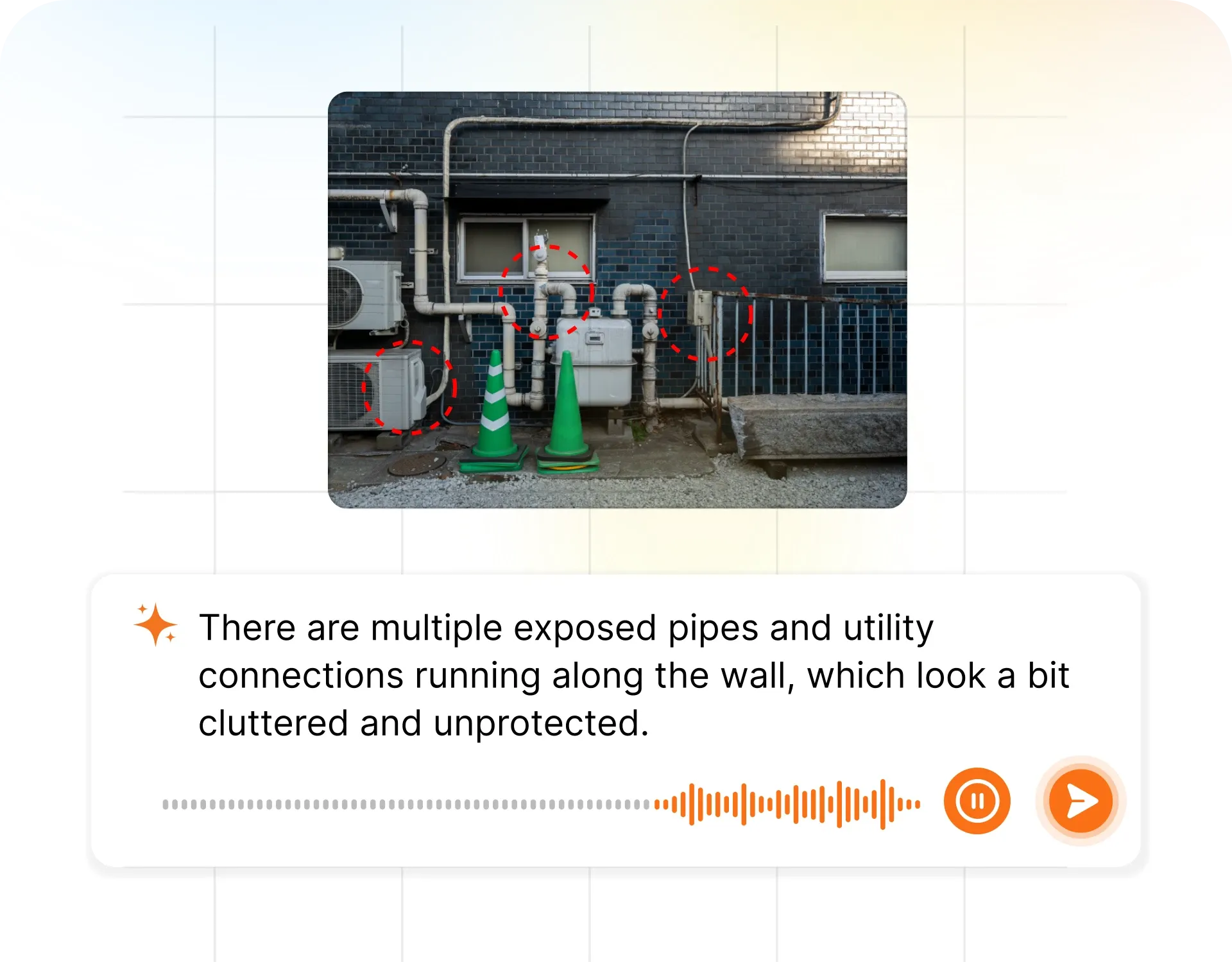
Inspectors speak their observations in any language. AI transcribes and fills the form in real time. Completely hands-free in the field.
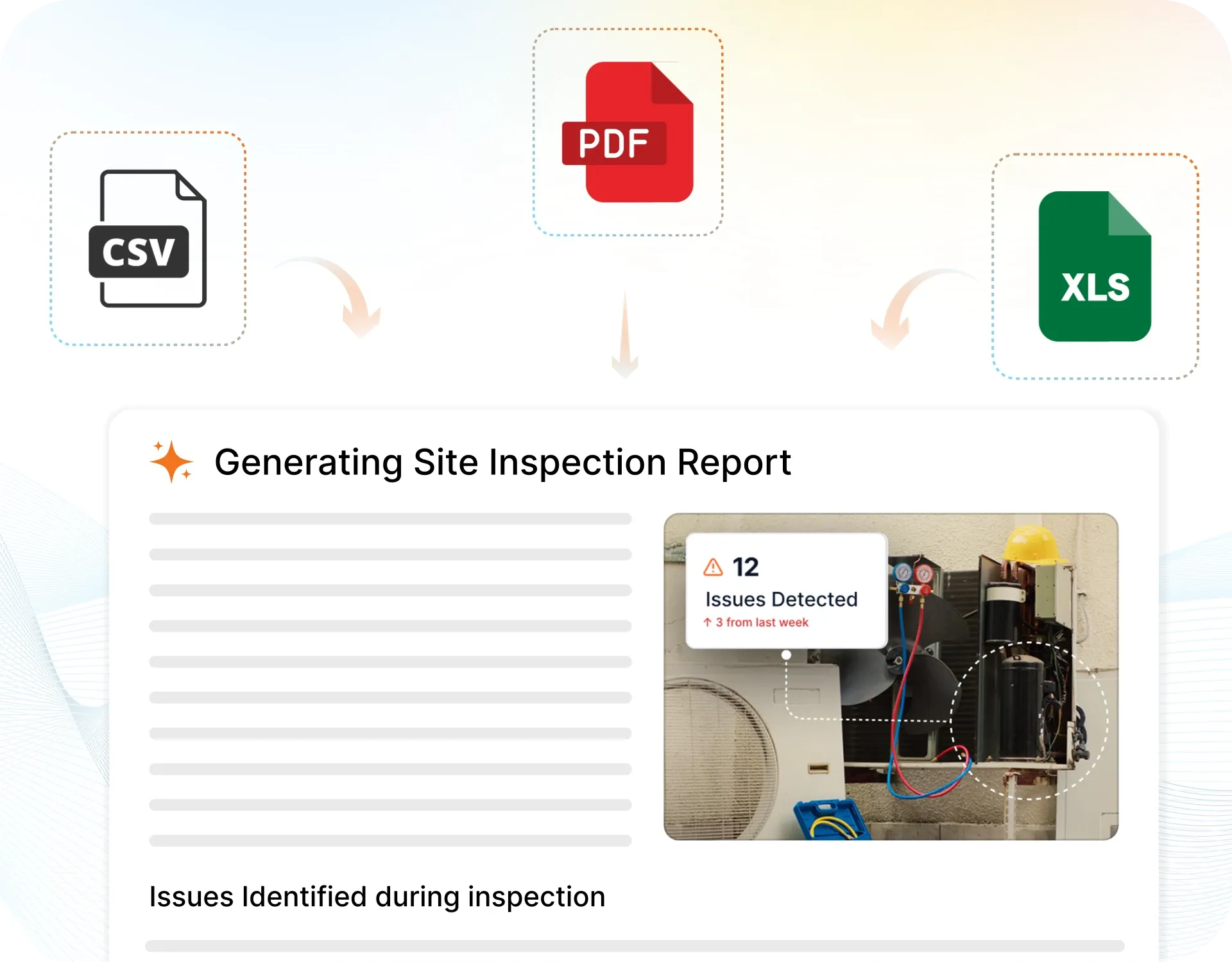
The moment an inspection is submitted, a branded PDF, Excel, or CSV report generates automatically. No manual work. No waiting.

InspectWrk integrates with the tools your team already uses, including Zoho, Microsoft 365, and SAP. No double entry.
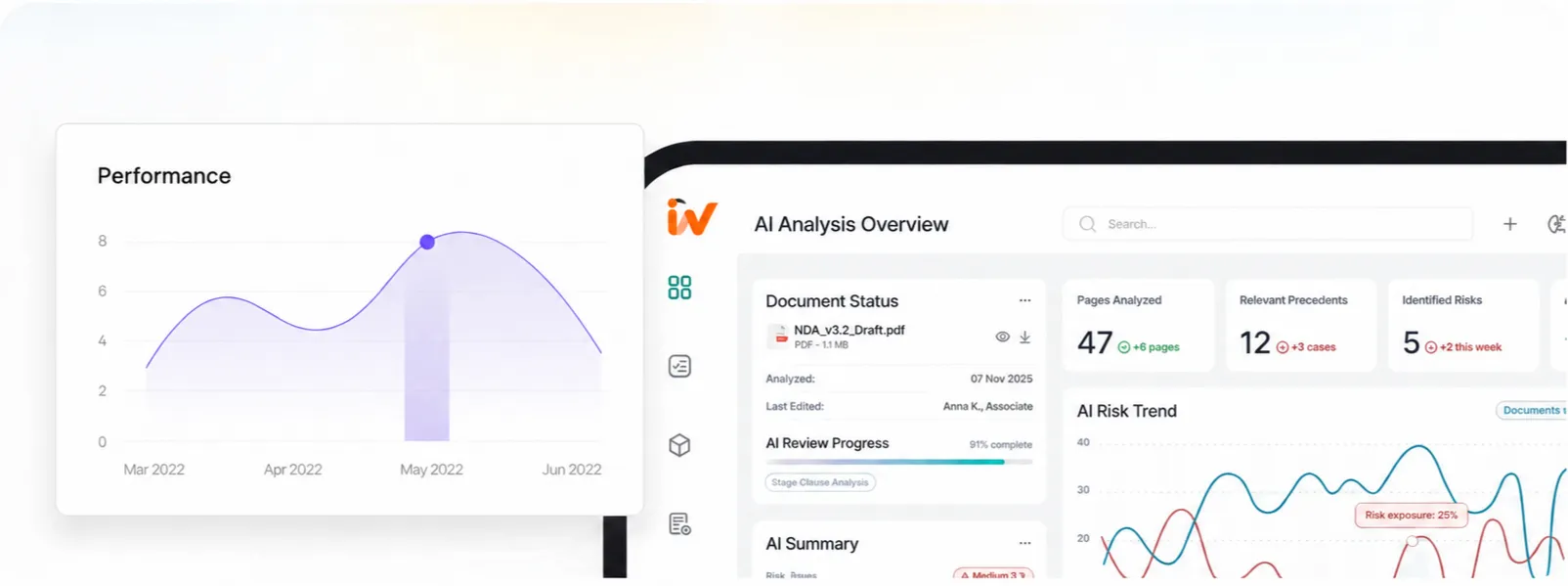
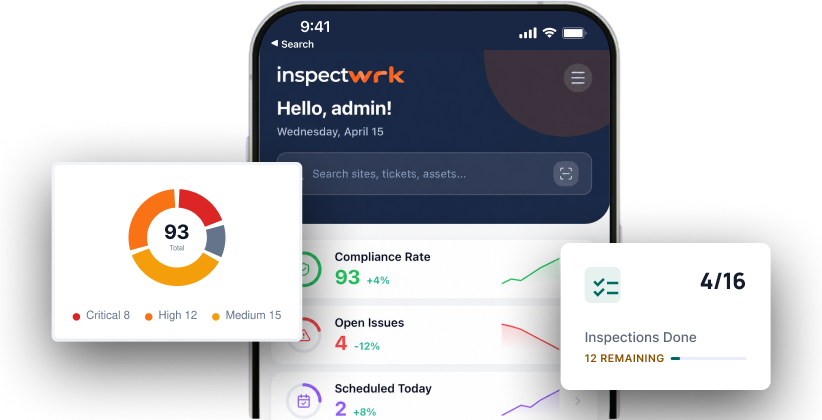
Your operations team sees completion rates, open issues, and compliance scores across all sites in real time. No chasing updates.
Manage every checklist in one connected workspace, capture evidence on mobile at the point of work, and let AI turn field inputs into clear, stakeholder-ready reports in minutes.


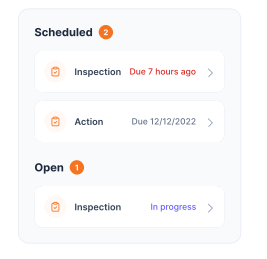
See which checklists your team has in progress across every site, jump into the same inspection with one tap, and keep field, supervisor, and back-office views in sync without sending screenshots on WhatsApp.


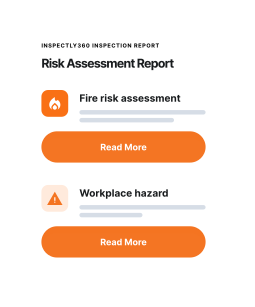
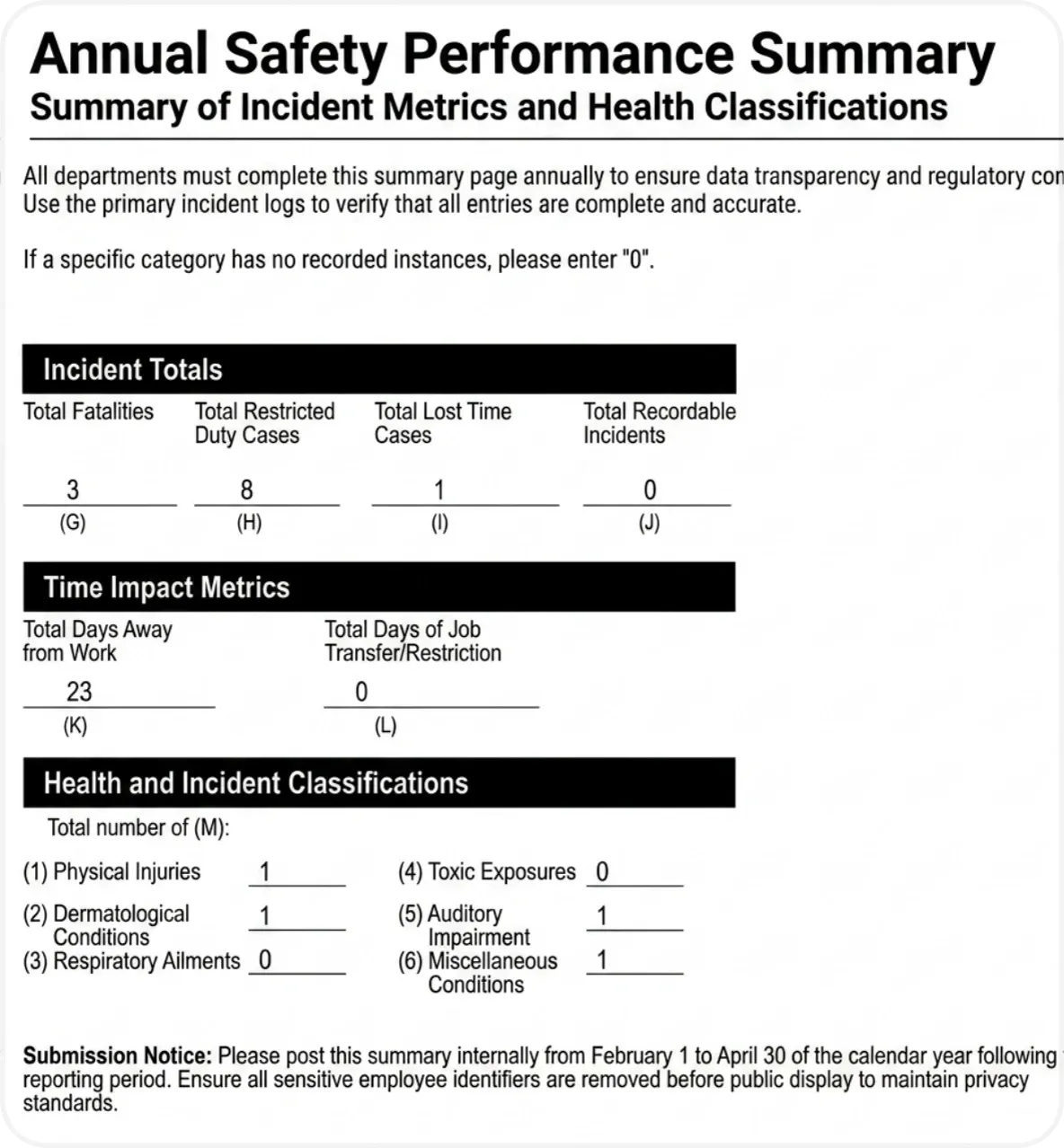


Every team reports differently. Build the report your operations, quality, or compliance leads actually want to read, share it as a branded PDF, and schedule delivery to the stakeholders who need it.


See completion, pass rate, and recurring findings across every checklist and every site, without pulling spreadsheets together at the end of the month.
Hand-picked templates for your specific industry needs.

Catch defects before handover and generate punch list reports in minutes.

Kitchen snagging: cabinets, worktops, appliances, tiling, plumbing, and electrical checks.

Bathroom snagging: tiling, sanitaryware, plumbing, ventilation, and finish quality.
Record readings, photos, equipment and scope changes at every visit, and close each job with a complete drying file. See it in 30 minutes.
It documents a water damage restoration job from start to finish. On the first visit the technician records the source of the water, the affected areas, the water category and class of loss, and any hazards. During mitigation they record extraction, removals and the drying equipment set in each room. At each monitoring visit they log temperature, relative humidity and material readings at the same mapped points. At the end they record final readings against the drying goal, take final photos and get the client's acknowledgement.
No. The checklist is an original field record organized around the topics the standard covers, such as assessment, drying, equipment and documentation. It does not reproduce the wording or requirements of ANSI/IICRC S500, which is a copyrighted, licensed document. Your technicians still need current training and access to the standard to make the right decisions on each job. What the checklist gives you is proof of what was done, when it was done and why, which is what adjusters and clients ask for.
The current edition is ANSI/IICRC S500, the Standard for Professional Water Damage Restoration, Fifth Edition, published in 2021. IICRC has started work on a revision, so check for a newer edition before relying on this page. The checklist does not quote clause numbers or drying targets from the standard. Instead, the first section asks you to record the edition your company works to, so the job file shows which version of the standard your decisions were based on if they are reviewed later.
A general restoration checklist confirms the damaged areas were repaired and handed back. This checklist goes deeper into the drying itself: water category and class, moisture mapping with reference readings, psychrometric readings at each visit, equipment placement and final verification against a drying goal. It is written for restoration contractors who work to the S500 standard and need a job file that proves the structure was dried properly. Mold remediation is covered by a separate standard, S520, and a separate checklist.
Technicians complete the checklist on a phone or tablet at each visit, even in basements with no signal, and the record syncs when they are back online. Readings, photos and equipment counts are stamped with the date, time and location. Managers see which jobs are still drying, which have stalled and which are ready for final verification. At the end of the job the whole file exports as one PDF report that you can send to the adjuster or the client without rebuilding anything.

An IICRC S500 checklist is a field record of a water damage restoration job, from the first site assessment through structural drying to final verification. Technicians use it to log the water category and class, map wet materials, record drying equipment and daily readings, and show the structure is dry before the equipment leaves. It follows the scope of ANSI/IICRC S500 but does not replace the standard.
An IICRC S500 checklist gives restoration technicians one place to document a water loss as the job happens. It follows the work in order: where the water came from, which category and class of loss applies, which materials are wet, what was extracted or removed, how drying was set up, and whether each area reached its drying goal. Every reading, photo and scope change is dated and tied to a location, so the job file stands up to questions from the adjuster or the client.
The sections follow the topics covered by ANSI/IICRC S500, the Standard for Professional Water Damage Restoration (Fifth Edition, 2021): inspection and assessment, safety, psychrometry and drying, equipment, structural materials, HVAC, contents and project documentation. The checklist records what your team did. It does not reproduce the standard, so keep a licensed copy for exact requirements and follow the project, manufacturer and safety requirements that apply to the job.
The drying went fine, but the moisture readings are in one technician's notebook, the photos are on another's phone, and nobody wrote down why the drywall came out. When the adjuster asks for the drying log, someone spends a day rebuilding it.
Missing readings, unexplained removals and jobs closed without final verification are what get restoration invoices questioned. A dated record for every visit fixes that where it starts.
Water damage jobs are judged on the paperwork as much as on the drying. A structured record helps you:
A complete water damage restoration record covers the job from the first visit to final sign-off:
Run the checklist at each stage of the job:
See how this checklist fits into Construction inspection software.
This checklist runs as a mobile inspection app that works fully offline on site, with AI-powered defect detection on every photo. To see it on your own workflows, talk to our team.