01 / 05Photo to formVISION AI
Take a Photo. AI Fills the Form.
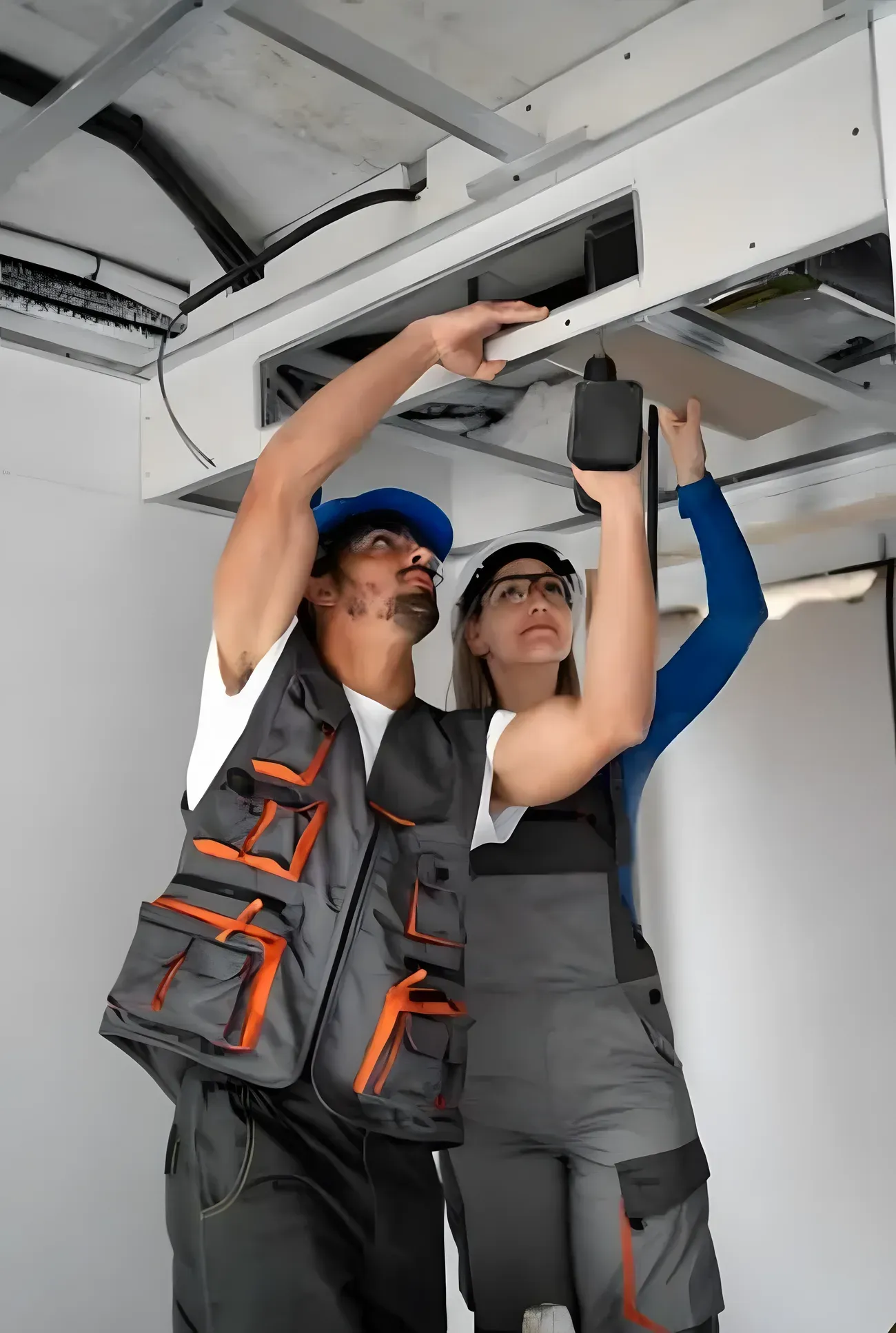
Your inspector takes a photo of any asset or defect. AI reads it and fills the inspection form automatically.
No typing. No manual entry.

Use this nuclear medicine gamma camera inspection checklist to inspect equipment identification and service history, detector head condition, collimator condition, gantry and mechanical movement, patient table and positioning, and controls and workstation, capturing photo evidence per finding and tracking each fix through to closure.
10 sections20 questions10 to 20 minutesFree
 Photo AddedPhoto AddedPhoto Added
10 sections · 20 questions · 10 to 20 minutes · Free
Record the gamma camera make, model, serial number, and location.
Confirm the service history and last preventive-maintenance and QC dates.
Inspect detector heads for damage and confirm covers and shielding are intact.
Confirm daily uniformity and flood QC are within tolerance.
Inspect collimators for dents, damage, and correct identification.
Confirm the collimator exchange and docking mechanism operates safely.
Check gantry rotation and detector positioning travel smoothly and stop accurately.
Confirm mechanical stops and limits operate.
Confirm table movement, indexing, and weight capacity operate correctly.
Check table surface, pads, and straps are intact and clean.
Confirm the acquisition workstation and controls respond and display correctly.
Check network and storage connectivity to the acquisition system.
Inspect cables and connectors for damage and secure fit.
Confirm cabling is managed to prevent damage during gantry motion.
Confirm energy calibration and peaking are correct for the isotopes in use.
Review image quality and count rate against the QC baseline.
Confirm collision detection and anti-collision interlocks stop motion.
Verify emergency stop halts gantry and table movement.
Record findings and QC results with evidence.
Raise a corrective action with owner and due date, and hold the unit if QC fails.
Three steps, about 10 to 20 minutes.
Section by section, one check at a time.
Tap Fail, add a photo, assign who fixes it.
The report is ready the moment you finish.
Paper for a one-off check. The app when every finding needs fixing.
Branded checklist
Customize with your logo and company details.
Quick answer
A nuclear medicine gamma camera inspection checklist is the structured inspection used to confirm biomedical equipment is calibrated, electrically safe, and fit for clinical use that healthcare teams use to check the key inspection points, assign owners to any failures, and close them with photo proof. Completed in InspectWrk, it is timestamped, works offline, and exports as an audit-ready healthcare report for NABH, NABL and Bio-Medical Waste Management Rules.
A nuclear medicine gamma camera inspection checklist is the structured inspection used to confirm biomedical equipment is calibrated, electrically safe, and fit for clinical use that healthcare teams use to check equipment identification and service history, detector head condition, collimator condition, gantry and mechanical movement, patient table and positioning, and controls and workstation, capture photo evidence, and track corrective actions to closure. Its job is to confirm biomedical equipment is calibrated, electrically safe, and fit for clinical use. Inspect a nuclear-medicine gamma camera: equipment identification and service history, detector head and collimator condition, gantry and mechanical movement, patient table and positioning, controls and workstation, cables, imaging-system checks, and safety and interlock checks. It is sometimes called the Gamma Camera Inspection Checklist or the Gamma Camera Maintenance Checklist.
Biomedical engineering teams still miss out-of-calibration devices, failed leakage or earth test and flat batteries or silenced alarms when rounds are ticked without calibration label photo, safety-test reading and asset tag photo.
Without service tags, teams reconstruct the evidence from phones instead of proving NABH, NABL and Bio-Medical Waste Management Rules readiness.
It helps infection control nurses and supervisors keep healthcare work consistent, safe, and auditable, with the evidence needed for NABH, NABL and Bio-Medical Waste Management Rules:
A complete nuclear medicine gamma camera inspection checklist works through equipment identification and service history, detector head condition, collimator condition, gantry and mechanical movement, patient table and positioning, and controls and workstation, then records inspection context, scored checkpoints, and evidence with corrective actions:
Record where and when the inspection runs:
Define what each checkpoint verifies and how results are scored:
Make every finding traceable and actionable:
Follow these steps to run the nuclear medicine gamma camera inspection checklist:
See how this checklist fits into Healthcare inspection software.
This checklist runs as a mobile inspection app that works fully offline on site, with AI-powered defect detection on every photo. To see it on your own workflows, talk to our team.
Submit an inspection and AI writes the PDF report and Excel sheet for you. No admin, no waiting.
Your inspector takes a photo of any asset or defect. AI reads it and fills the inspection form automatically.
No typing. No manual entry.
Inspectors speak their observations in any language. AI transcribes and fills the form in real time.
Completely hands-free in the field.
The moment an inspection is submitted, AI summarises the findings and builds a branded PDF report and an Excel sheet for you.
No manual reporting. No copy-paste.
InspectWrk integrates with the tools your team already uses, including Zoho, Microsoft 365, and SAP.
No double entry.
Your operations team sees completion rates, open issues, and compliance scores across all sites in real time.
No chasing updates.
See which checklists your team has in progress across every site, jump into the same inspection with one tap, and keep field, supervisor, and back-office views in sync without sending screenshots on WhatsApp.
Every team reports differently. Build the report your operations, quality, or compliance leads actually want to read, share it as a branded PDF, and schedule delivery to the stakeholders who need it.
See completion, pass rate, and recurring findings across every checklist and every site, without pulling spreadsheets together at the end of the month.
See this checklist running on your own sites in a 30-minute demo.
Book a Free DemoIt is scoped to the scheduled cadence and controls that infection control nurses, biomedical engineers, facility managers, NABH coordinators run, not a one-off handover walk. It prompts equipment identification and service history, detector head condition, collimator condition, gantry and mechanical movement, patient table and positioning, and controls and workstation, watching for out-of-calibration devices, failed leakage or earth test and flat batteries or silenced alarms, records pass, fail, or N/A with calibration label photo, safety-test reading and asset tag photo on critical items, and raises corrective actions with owners before sign-off. Run in InspectWrk, the record is timestamped and rolls into trend reports so repeat failures surface before the next audit.
They work through each checkpoint to confirm biomedical equipment is calibrated, electrically safe, and fit for clinical use, confirm the required controls are in place, and capture calibration label photo, safety-test reading and asset tag photo on anything that fails or needs proof. Priority failure modes include out-of-calibration devices, failed leakage or earth test and flat batteries or silenced alarms. Each checkpoint takes pass, fail, or N/A, and a failed item stays open until the fix is verified.
It expects calibration label photo, safety-test reading and asset tag photo, plus service tags on failed or critical items, so findings rest on proof rather than memory. Records support NABH, NABL and Bio-Medical Waste Management Rules, and every photo, note, and sign-off stays attached to the inspection instead of living in chat threads.
The nuclear medicine gamma camera inspection checklist covers equipment identification and service history, detector head condition, collimator condition, gantry and mechanical movement, patient table and positioning, and controls and workstation. On each checkpoint, infection control nurses record pass, fail, or N/A, add a photo on anything that needs proof, and raise a corrective action with an owner and due date. Run in InspectWrk, the inspection is timestamped, traceable to whoever completed it, and exports as a single healthcare report aligned to NABH, NABL and Bio-Medical Waste Management Rules.

Test medical-gas alarms: area and master alarms, alarm activation, audible and visual indicators, pressure conditions, sensor response, and panel status, with test results.

Inspect a mechanical ventilator for operational readiness: power supply, battery, self-test, alarm functionality, oxygen and air supply connections, breathing circuit, tubing and connectors, filters, sensors, display, and controls, with cleaning and inspection documentation.

Inspect the autoclave or steam sterilizer as equipment: chamber condition, door, locking mechanism and gasket, pressure and temperature indicators, controls and cycle settings, alarms, water supply and drainage, leaks and corrosion, cycle records, and sterilization indicators.

Inspect a multiparameter patient monitor: display, power and battery, alarm system, ECG leads, SpO2 sensor, blood-pressure cuff, temperature probe, cables and connectors, and controls, with physical-condition checks, cleaning, and functional testing.