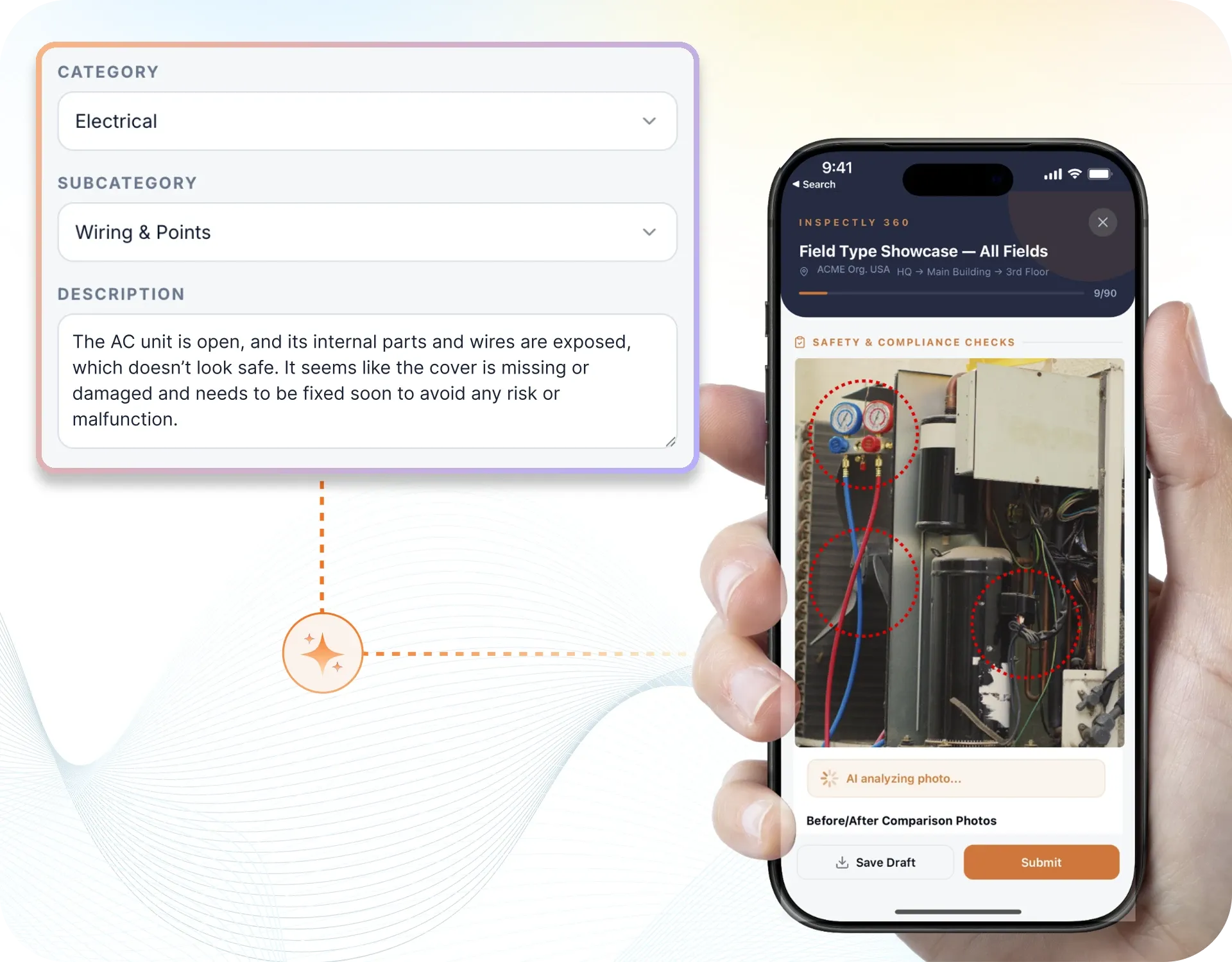
Take a Photo. AI Fills the Form
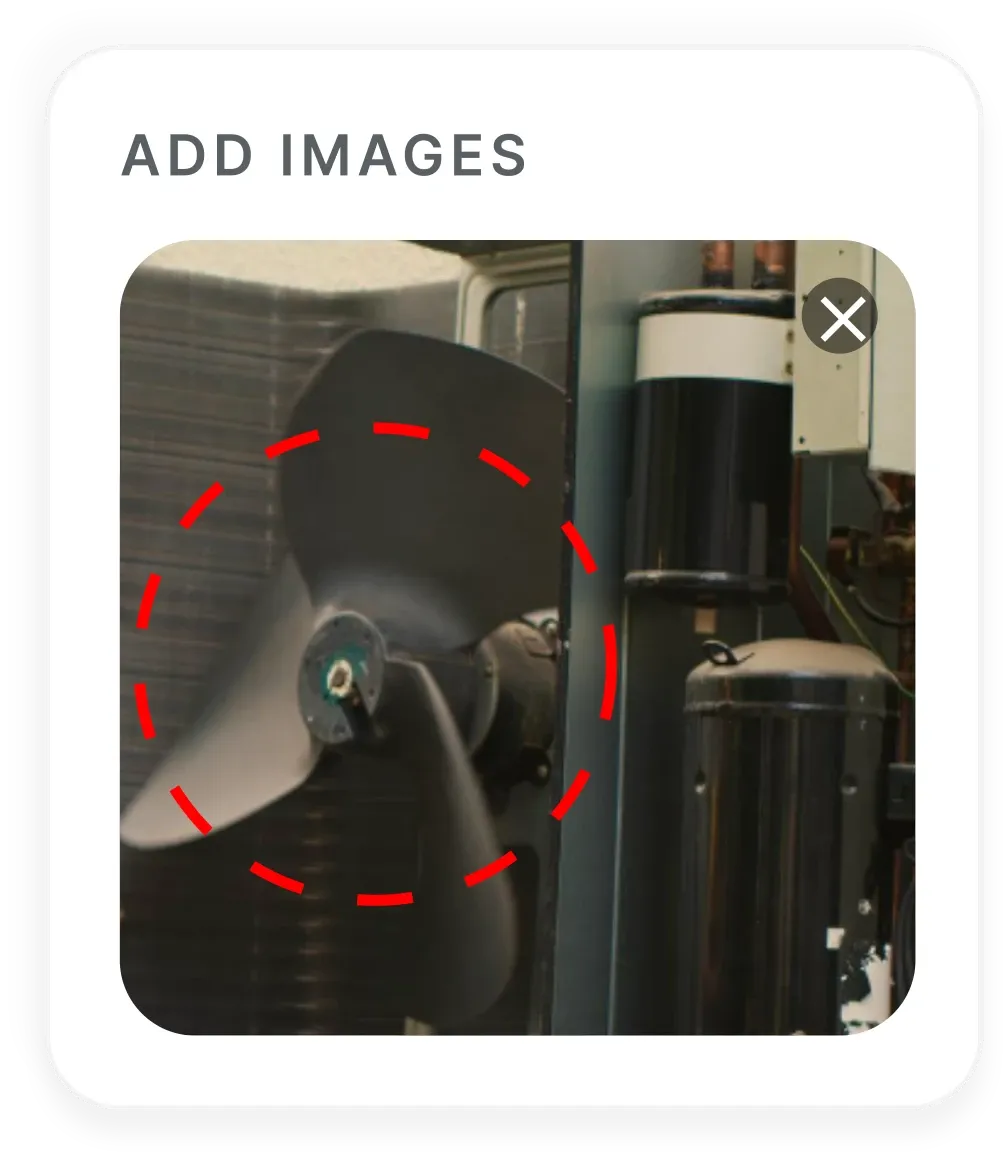
Your inspector takes a photo of any asset or defect. AI reads it and fills the inspection form automatically. No typing. No manual entry.

Use this ISO 17025 checklist to check general requirements: impartiality and confidentiality, structural requirements, resource requirements: personnel, facilities and equipment, metrological traceability and externally provided products and services, process requirements: requests, methods, sampling and items, and technical records, measurement uncertainty and validity of results, scoring each item and raising corrective actions with owners and due dates.

Customize with your logo and company details.
Available on App
Run inspections on iOS and Android - no internet required. Capture photos, annotate defects, and generate reports in the field.
Run the ISO 17025 Checklist on the InspectWrk app instead of paper. Inspectors capture photo evidence, work offline, and assign corrective actions on the spot, and the report generates itself the moment the inspection is signed off.

ISO 17025 Checklist
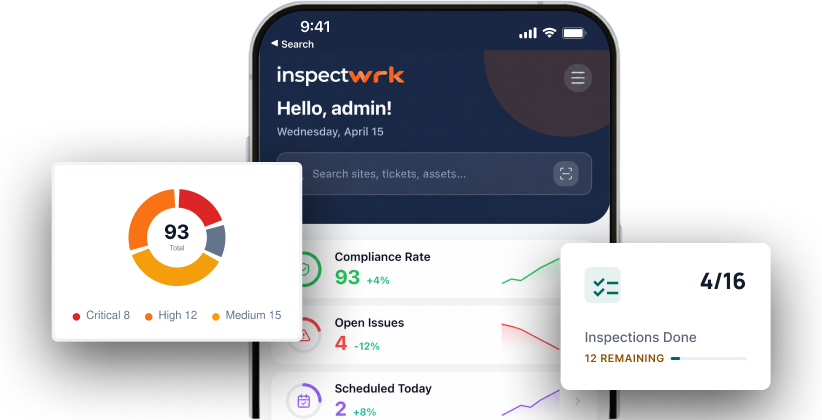
ISO 17025 Checklist Dashboard
Prioritized actions to keep operations running smoothly today.
Total Revenue
$42,680
+12% compared to last month
Active Projects
128
+8 new this week
Open Requests
56
-15 resolved this week
Operational Target
You're on track to meet this month's operational goal.
Target Task
200 ↑
Complete Task
136 ↑
Pending Task
10 ↓
Monthly Performance
Recent Client Activity
Everything your field team does on paper, InspectWrk does automatically: faster, more accurate, and without the admin.
Your inspector takes a photo of any asset or defect. AI reads it and fills the inspection form automatically. No typing. No manual entry.
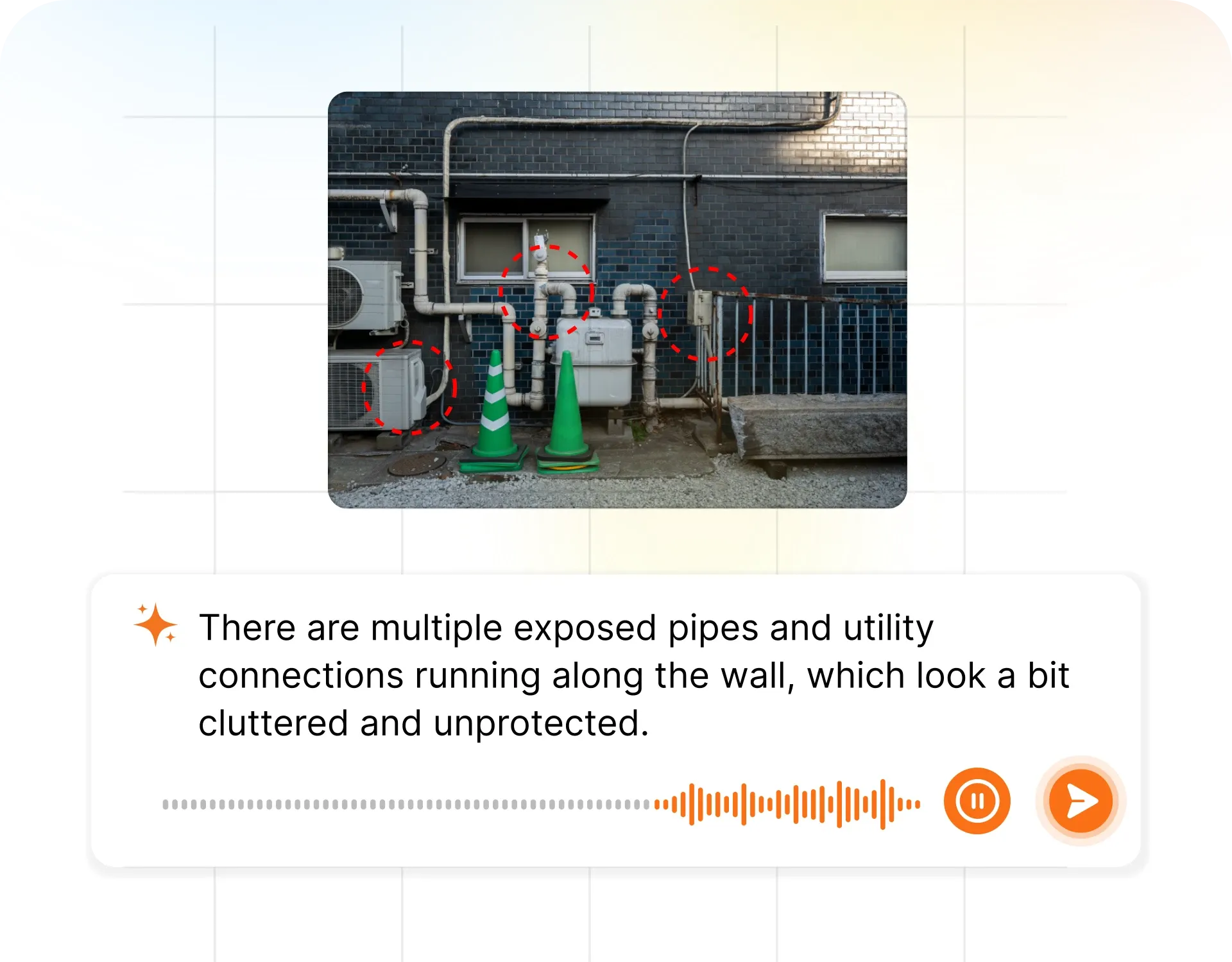
Inspectors speak their observations in any language. AI transcribes and fills the form in real time. Completely hands-free in the field.
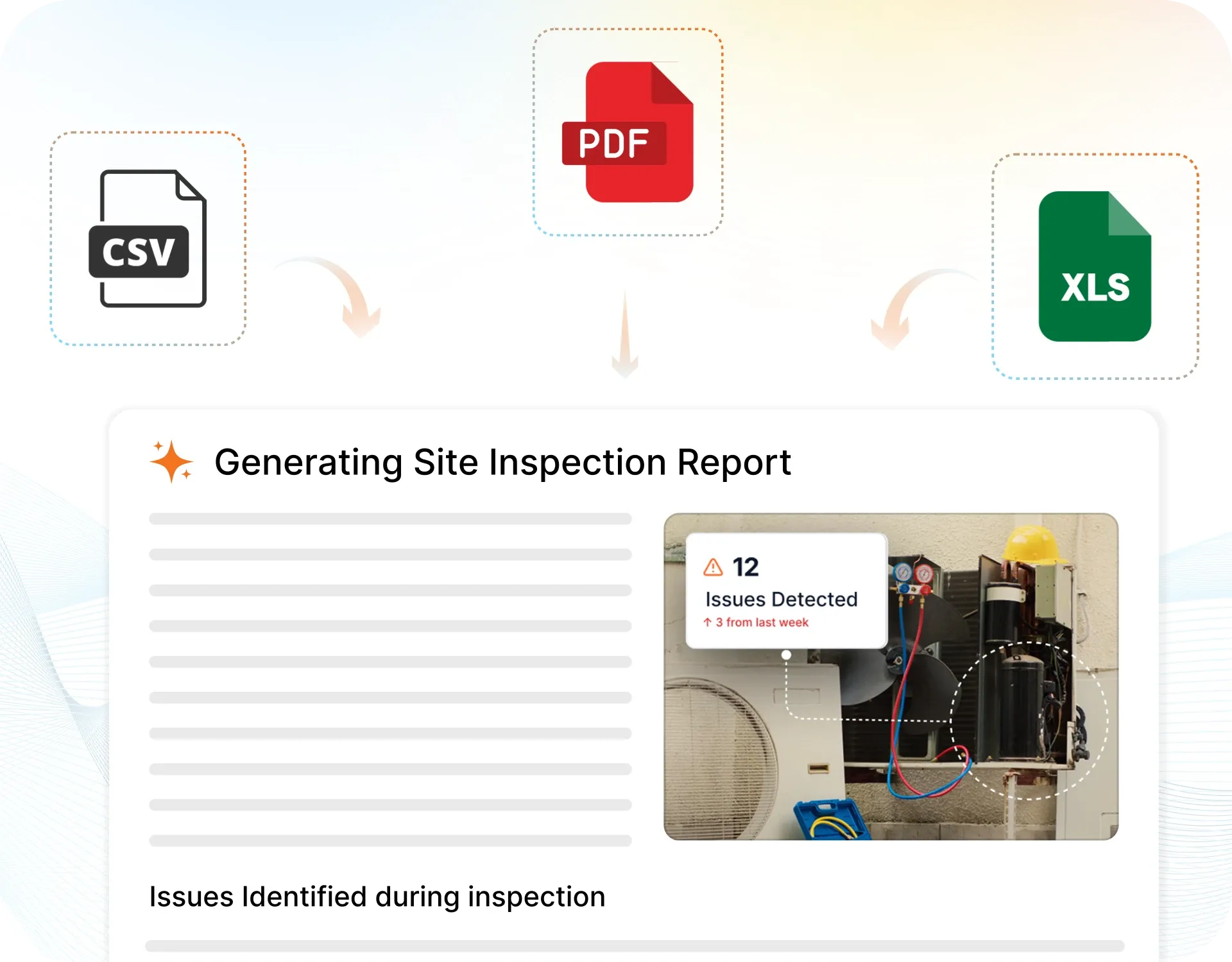
The moment an inspection is submitted, a branded PDF, Excel, or CSV report generates automatically. No manual work. No waiting.

InspectWrk integrates with the tools your team already uses, including Zoho, Microsoft 365, and SAP. No double entry.
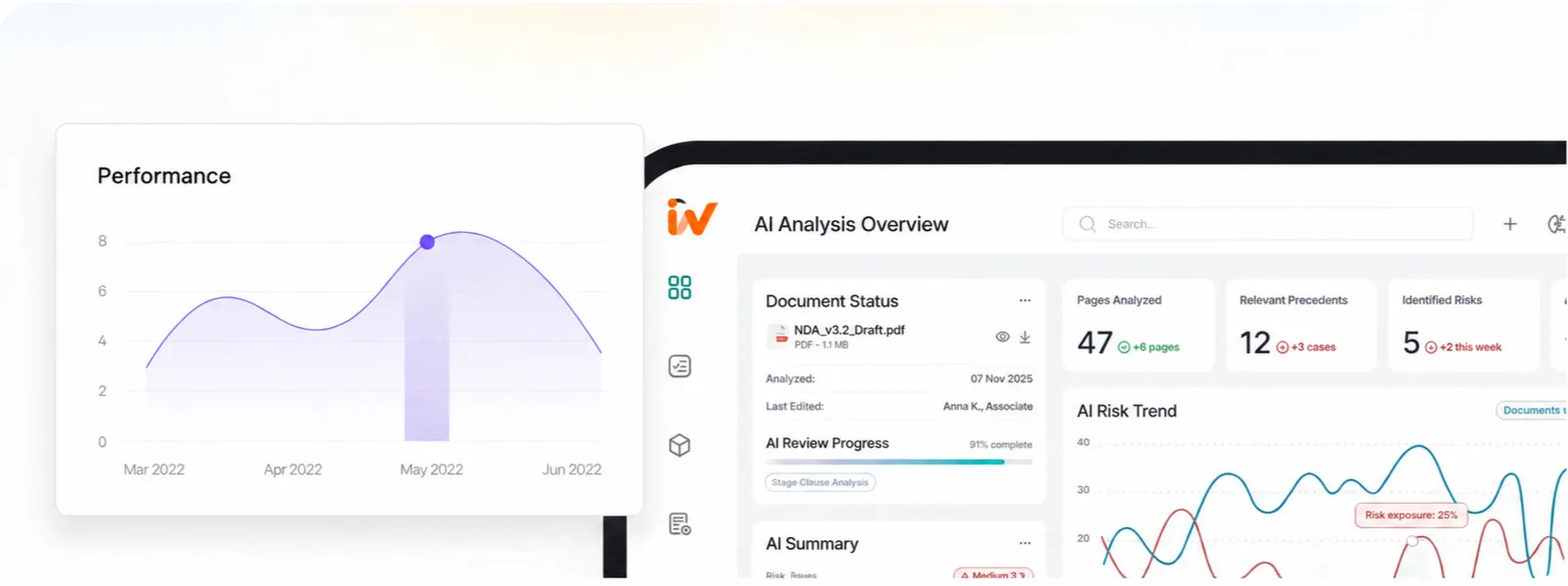
Your operations team sees completion rates, open issues, and compliance scores across all sites in real time. No chasing updates.
Manage every checklist in one connected workspace, capture evidence on mobile at the point of work, and let AI turn field inputs into clear, stakeholder-ready reports in minutes.

See which checklists your team has in progress across every site, jump into the same inspection with one tap, and keep field, supervisor, and back-office views in sync without sending screenshots on WhatsApp.


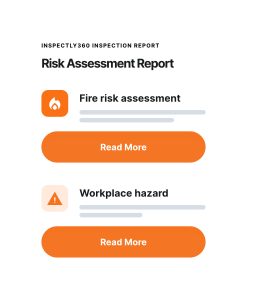
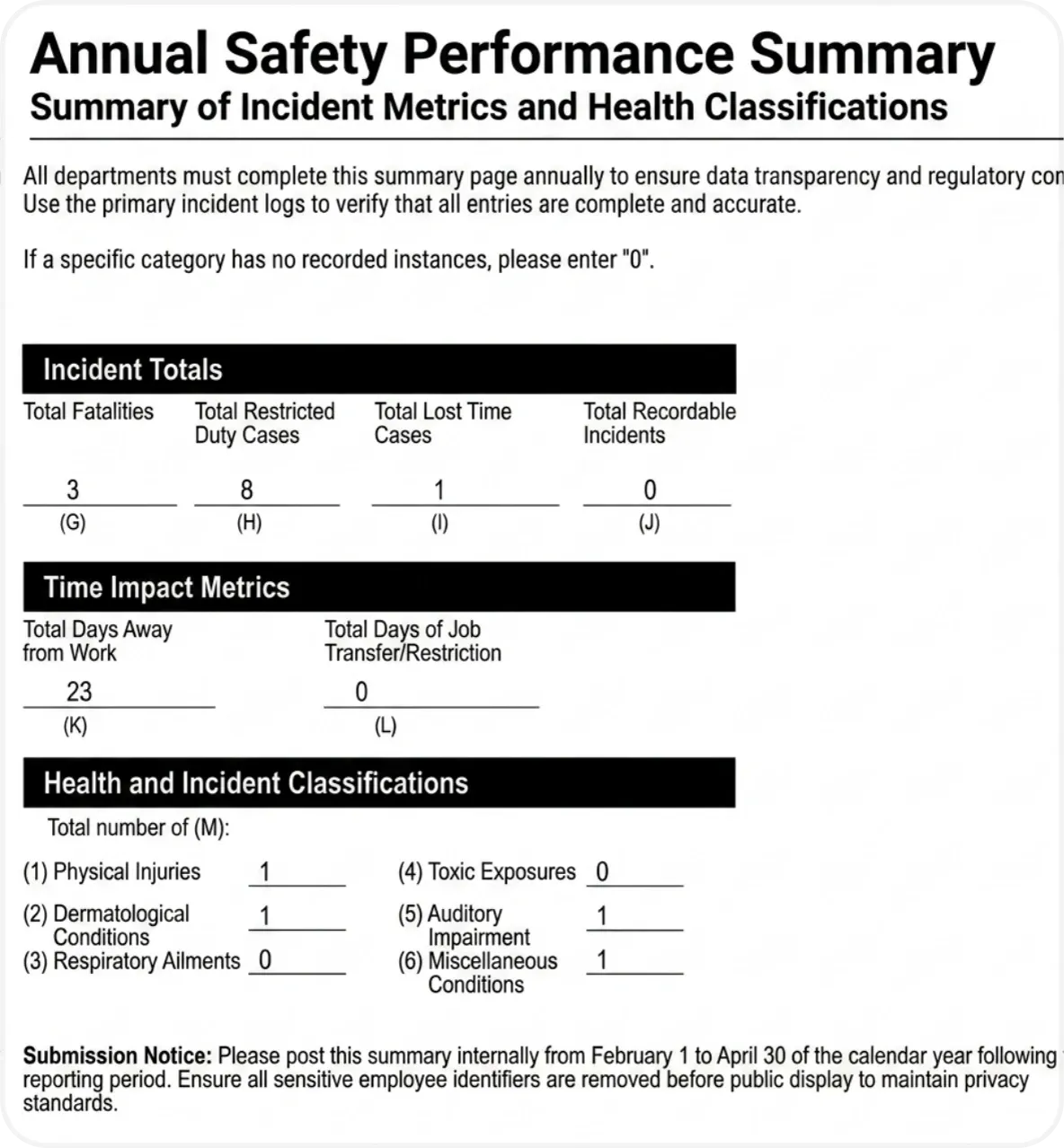


Every team reports differently. Build the report your operations, quality, or compliance leads actually want to read, share it as a branded PDF, and schedule delivery to the stakeholders who need it.


See completion, pass rate, and recurring findings across every checklist and every site, without pulling spreadsheets together at the end of the month.
Hand-picked templates for your specific industry needs.

Run the ENMS Audit Checklist on the InspectWrk app to capture photo evidence per finding and generate audit-ready reports.

Use this checklist to verify ISO management-system conformance and internal audit readiness.

Use this checklist to verify ISO 14001 environmental-management-system conformance.

Use this checklist to verify ISO 14001 environmental-management-system conformance.
An ISO 17025 checklist is used to assess a testing or calibration laboratory against ISO/IEC 17025:2017, the standard for the competence of testing and calibration laboratories. It works clause by clause through the general requirements (impartiality and confidentiality), the structural and resource requirements, the process requirements and the management system, recording the conformity status, the supporting evidence and any corrective actions. It is a readiness and internal-assessment tool that helps a laboratory find and close gaps against the standard before an accreditation body assesses it, rather than a generic workplace inspection.
This checklist is based on ISO/IEC 17025:2017, the current edition, which replaced the 2005 version. The 2017 edition is structured around general requirements (impartiality and confidentiality), structural requirements, resource requirements, process requirements and management system requirements, and it introduced a stronger focus on risk-based thinking. The checklist follows that clause structure. Laboratories previously accredited against the 2005 edition should confirm they have transitioned, since accreditation bodies assess against 2017. The specific evidence you record depends on your laboratory's scope, methods and activities.
This general ISO 17025 checklist assesses the laboratory against every clause of the standard, as a readiness review. The ISO 17025 internal audit checklist is built around the audit process itself, planning, evidence, findings and corrective actions, for auditing an operating management system. The ISO 17025 gap assessment checklist records the conformity status of each requirement and an action plan for accreditation readiness. They overlap in subject but differ in purpose: general review, versus auditing, versus gap and readiness planning. Use the one that matches what you are doing.
In InspectWrk, the ISO 17025 checklist runs as a structured assessment on a phone, tablet or laptop: the assessor works through each clause group, records the conformity status and attaches the evidence, and raises a corrective action with an owner and due date for every gap. Everything is timestamped and stored in one place, so the laboratory can track gaps to closure, show its readiness position, and produce an evidence record for management review or an accreditation assessment, rather than managing the review in scattered spreadsheets.

An ISO 17025 checklist is used to assess a testing or calibration laboratory against the requirements of ISO/IEC 17025:2017. It works clause by clause through the general requirements (impartiality and confidentiality), the structural and resource requirements (personnel, facilities, equipment, metrological traceability and external providers), the process requirements (methods, sampling, handling of items, technical records, measurement uncertainty, validity of results and reporting) and the management system, recording the conformity status, the supporting evidence and any corrective actions. It is a readiness and audit tool, not a generic inspection.
An ISO 17025 checklist is used to assess whether a testing or calibration laboratory meets the requirements of ISO/IEC 17025:2017, the international standard for the competence of testing and calibration laboratories. Its purpose is a structured, evidence-based review of the laboratory against each clause, so gaps are found and closed before an accreditation body assesses the laboratory. It is a readiness and internal-assessment tool, not a general workplace inspection.
Working through the general requirements, the structural and resource requirements, the process requirements and the management system, the checklist records the conformity status of each requirement, the documented information that demonstrates it, and any corrective action needed. Because the specific evidence depends on the laboratory's scope and methods, the checklist covers the requirement topics of the standard and lets you record what applies, rather than assuming fixed thresholds or intervals.
Laboratories often prepare for ISO/IEC 17025 with a management-system checklist borrowed from ISO 9001, which misses the parts that matter most for a laboratory: metrological traceability, measurement uncertainty, method validation and the validity of results. The gaps stay hidden until an accreditation assessor raises them, when they are expensive to fix and can delay accreditation.
An ISO 17025 checklist built around the standard's own clauses fixes that by assessing the general, structural, resource, process and management-system requirements together, recording evidence and gaps as it goes. The laboratory sees where it stands against the real requirements and can close gaps before the assessment rather than during it.
A clause-based checklist makes 17025 readiness visible and defensible:
A complete assessment runs from the general requirements to the management system:
Assess the foundations:
Assess the resources:
Assess the technical work:
Assess the system:
Assess the laboratory clause by clause:
See how this checklist fits into AI audit software.
This checklist runs as a mobile inspection app that works fully offline on site, with AI-powered defect detection on every photo. To see it on your own workflows, talk to our team.