
“InspectWrk transformed how we manage site safety inspections. The offline capability alone saved us countless hours. Our compliance rate jumped from 72% to 96% in just three months.”
Sarah Mitchell
Meridian Construction Group

Convert your checklist into Mobile App
Need AQL inspection software built around how your quality team samples and inspects lots? We provide it. InspectWrk builds an AQL inspection workflow on our platform, configured to your sampling plans, defect classifications, and acceptance criteria. Book a demo to scope it.
AQL inspection software runs an acceptance sampling inspection from start to finish: record the lot, work out the sample to inspect, inspect it, classify the defects found, and decide whether the lot is accepted or rejected against the agreed AQL (Acceptance Quality Limit, still often called the acceptable quality level).
Without it, AQL inspections run on printed tables, clipboards, and spreadsheets. Inspectors look up sample sizes by hand, defect counts are tallied on paper, and the accept or reject decision depends on who did the arithmetic. Photos sit on personal phones, and when a supplier or customer disputes a result, the evidence behind the decision is hard to find.
This is the workflow we configure for you, from the lot to the report. Each step follows your own sampling plan and acceptance criteria.
Record the order, product, supplier, and lot or batch details, including the lot size the sample is drawn from.
The workflow applies the sampling plan, inspection level, and AQL values you specify for that product, customer, or supplier.
The sample size and the acceptance and rejection numbers are shown to the inspector according to your agreed sampling method, so nobody works them out by hand.
Inspectors check each sampled unit against your checklist on a phone or tablet, including measurements and visual checks, offline where needed.
Each defect is logged with a photo and classified as critical, major, or minor, and the count for each class builds up as the inspection runs.
Defect counts for each class are checked against your limits, so the result follows your criteria rather than individual judgement.
The inspector or quality lead records accept, reject, or hold with a signature and the supporting evidence, and a rejected lot can raise a corrective action.
A branded inspection report with the lot details, sample, defect counts, photos, and decision is ready to share with suppliers, customers, or your quality team.
AQL inspection software covers acceptance sampling inspections for incoming goods, production, final, and pre-shipment inspections, in industries such as apparel and textiles, electronics, consumer goods, and industrial products. The scope below is what the solution we build runs and records.
InspectWrk is the AQL inspection layer beside your ERP or QMS, not a replacement for either. The ERP keeps orders, lots, and stock, and the QMS keeps nonconformances and controlled documents. InspectWrk owns the inspection itself: sampling, defect classification, evidence, the decision, and the report. Results link back to the lot and supplier so each system keeps its own job.
Validate four things during the pilot rather than after. First, that the sample sizes and acceptance numbers match your reference tables for each plan. Second, that defect classes and examples read clearly to inspectors. Third, that the decision and any corrective action are recorded correctly. Fourth, that the report meets what your suppliers and customers expect.
Inspection results can decide whether a shipment is accepted, so their integrity matters. Role-based access lets inspectors record results, quality leads approve decisions, and suppliers or customers receive only the reports meant for them. Every inspection, photo, and decision is timestamped and retained for the period your quality team requires.
An AQL rollout works best one product line or supplier at a time. Start where disputes or rejects are most frequent, prove the sampling and decision workflow there, then extend it. Because plans and defect lists are configuration rather than code, each product or supplier can carry its own plan while results roll up to one view.
What AQL Inspection Software covers for your team.
Quality teams comparing InspectWrk to printed AQL tables, clipboards, and spreadsheets see the difference on five points: sample sizes, defect classification, the decision, evidence, and lot history.
| Capability | Without InspectWrk | With InspectWrk |
|---|---|---|
| Sample sizes | Inspectors look up the sample size and acceptance numbers in a printed table, and mistakes go unnoticed. | The sample size and pass or fail limits come from your configured plan for each lot. |
| Defect classification | Each inspector judges defect severity differently, so results vary by person. | Defect classes and examples are built into the form, so every inspector classifies the same way. |
| Accept or reject decision | Defect counts are tallied on paper, and the decision depends on who did the arithmetic. | Counts are compared with your acceptance criteria as the inspection runs, and the decision is recorded and signed. |
| Evidence | Defect photos sit on personal phones, so a disputed result is hard to defend. | Every defect carries its photo, class, and timestamp inside the inspection record. |
| Lot and supplier history | Past inspections are filed in folders, so repeat problems with a supplier or product are missed. | Inspection history by lot, product, and supplier is searchable, with defect trends over time. |
Manage every checklist in one connected workspace, capture evidence on mobile at the point of work, and let AI turn field inputs into clear, stakeholder-ready reports in minutes.

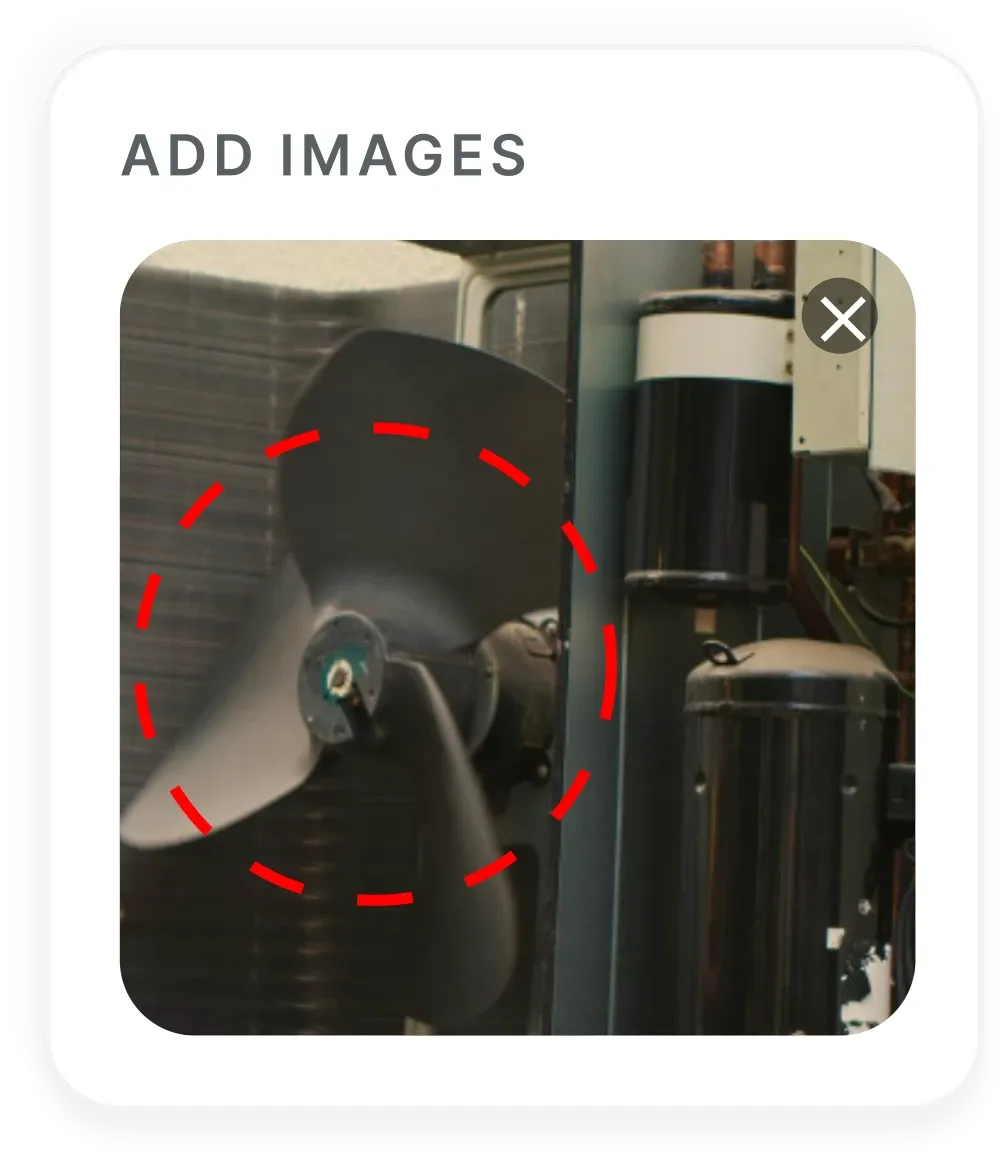
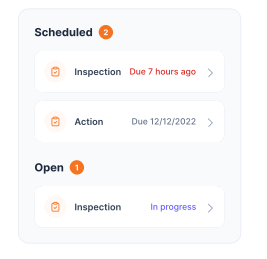
See which checklists your team has in progress across every site, jump into the same inspection with one tap, and keep field, supervisor, and back-office views in sync without sending screenshots on WhatsApp.


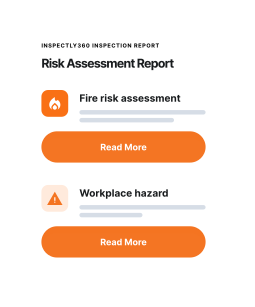
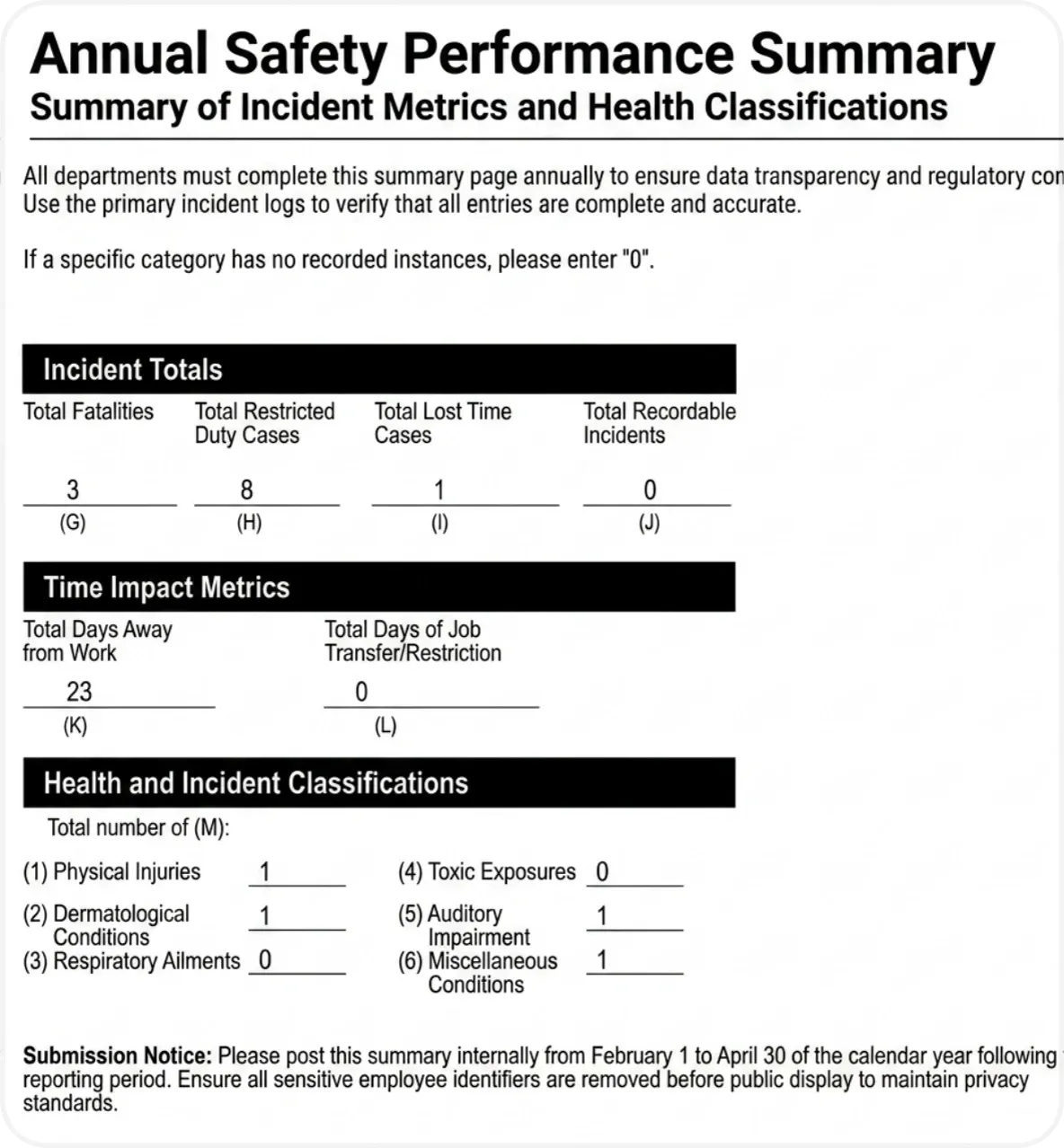


Every team reports differently. Build the report your operations, quality, or compliance leads actually want to read, share it as a branded PDF, and schedule delivery to the stakeholders who need it.


See completion, pass rate, and recurring findings across every checklist and every site, without pulling spreadsheets together at the end of the month.
What changes once aql inspection software is standardised on InspectWrk.




“InspectWrk transformed how we manage site safety inspections. The offline capability alone saved us countless hours. Our compliance rate jumped from 72% to 96% in just three months.”
Sarah Mitchell
Meridian Construction Group

“The AI-powered defect detection has changed how we work. Our inspectors capture photos and the system flags issues we'd have missed. It's like having an expert reviewer on every site visit.”
James Chen
Pacific Manufacturing Co.
“Rolling out digital checklists across multiple projects gave us instant visibility into recurring safety issues. We now resolve critical findings in hours instead of days.”
Olivia Carter
Northbridge Infrastructure
Get started with inspection and audit checklist templates.

Use this Incoming Inspection Checklist to verify critical steps, capture evidence, assign corrective actions, and keep operations safe and compliant.

Use this Quality Control Incoming inspection to verify critical checkpoints and safety controls, compliance records and sign-off and corrective actions with photo evidence on…
Use these apps to run inspections and audits.

by InspectWrk
QA/QC inspections with criteria, evidence, and reports.

by InspectWrk
Incoming material and receipt inspections with acceptance criteria.

by InspectWrk
Final product and shipment inspections with release criteria.

by InspectWrk
Run manufacturing quality inspections with defect evidence, scoring, and corrective action follow-up.
An AQL calculator answers one question: what sample size should I inspect for this lot? AQL inspection software runs the whole inspection around that answer. It records the lot, presents the sample and its pass or fail limits, guides the inspector through each sampled unit, classifies defects by severity, compares the counts with your criteria, records the decision, and produces the report. InspectWrk builds this workflow on our inspection platform around your own plans, so the sample size, the inspection, the evidence, and the decision stay in one record instead of a table, a clipboard, and a spreadsheet.
Yes. We configure the solution to the sampling plans your customers, contracts, or internal procedures specify, including the inspection level and the AQL values for each defect class. Different products, customers, or suppliers can carry different plans, so a strict plan for one customer does not have to apply to every lot. Where you use normal, tightened, or reduced inspection, or single or double sampling, we scope that with you during setup. Before rollout, your quality team checks the sample sizes and acceptance numbers against the reference tables you work from, so the workflow matches your method exactly.
Yes. Defect classes are built into the inspection form, usually these three, with your own defect list and examples under each class so inspectors classify consistently. Each defect is logged against the sampled unit with a photo, and the count for each class builds up as the inspection runs. Those counts are then checked against the limits for that class, so the decision reflects your criteria. Defect data also feeds history by product and supplier, which shows where the same defect keeps appearing and which suppliers or lines need attention.
Yes. Inspectors run AQL inspections on a phone or tablet at the factory, warehouse, or receiving dock, and the forms work offline where signal is poor, syncing when the device reconnects. Each defect can carry a photo, measurements can be recorded against the sampled unit, and the inspector signs the result. The inspection report then includes the lot details, the sample, defect counts by class, the photos, and the accept or reject decision, in a branded format you can send to suppliers or customers. This is the part of AQL work that is hardest to keep reliable on paper.
It follows the sampling method you specify. Many teams work from ISO 2859-1 or ANSI/ASQ Z1.4, and some customers or contracts set their own plans. We configure the workflow to the standard and edition you use, and your quality team confirms the sample sizes and acceptance numbers against your reference tables before rollout. InspectWrk is not certified or endorsed by ISO or ANSI, and it does not guarantee the outcome of any inspection. The solution applies your chosen method consistently and records the evidence behind each decision; the method itself remains your quality team's responsibility.
We start by scoping how your team inspects today: your products, sampling plans, defect classes, acceptance criteria, report format, and who approves decisions. Our team then configures the solution on the InspectWrk platform, pilots it on one product line or supplier, and rolls it out once the results match your method. Your ERP can keep purchase orders and stock, and your QMS can keep nonconformance and document control. Lot details can come in, and inspection results and decisions can go out through exports or integration, so the AQL record sits alongside the systems you already use.
Book 30 minutes to discuss your challenges and see how InspectWrk digitizes operations with mobile apps, automated reporting, and real-time dashboards.